
Or try one of the following: Afterdawn, Ajaxian, Andy Budd, Ask a Ninja, BBC News, BBC China, Brent Simmons, CNN, Digg, Flickr, Google News, Harvard Law, iTunes, Japanese Language, Newspond, OK/Cancel, OS News, Phil Ringnalda, reddit, Romanian Language, Ryan Parman, Technorati, Engadget, Web 2.0 Show, XKCD, Yahoo! News, Zeldman
yahoo.com/news Top Stories
yahoo.com/news Top StoriesTrump says his planned arch will double as a military complex housing drones and snipers 20 Sep 2026, 3:04 pm
President Donald Trump on Sunday said his proposed 250-foot triumphal arch will now be a “top grade” military complex that will house drones, snipers and ammunition.
In a post on Truth Social, Trump wrote that he has agreed to convert the arch “at the strong request” of the U.S. military, and “for National Security purposes.”
The “Military Complex/Triumphal Arch” near Arlington National Cemetery will “house, store, and have the rapid ability to use large numbers of drones, plus Snipers, on both the roof and plaza areas, and additionally have and hold large quantities of sniper ammunition in storage,” Trump wrote. “There will be no facility like this anywhere in the World.”
Trump’s new claims about the arch, which come as veterans groups, historic preservationists and others attempt to stop the project, resemble his arguments for the need to build a ballroom at the White House. Trump initially said the ballroom was needed to entertain guests but more recently has said it was a “desperately needed National Security structure.” That argument also has become central to the administration’s legal claims that the ballroom must be built.
The Trump administration, which plans to begin construction on the arch as soon as November, has been consulting with D.C.’s and Virginia’s historic preservation offices as part of a required federal preservation process. The National Capital Planning Commission previously said the arch is intended to be a “visitor destination” with an observation deck.
The topic of converting the arch to a military complex has not previously been raised, even as the project has undergone months of federally required reviews.
The White House did not immediately respond to questions about the president’s post. The Interior Department, which oversees the federal parkland where the arch would be built, did not immediately reply to requests for comment, and a Pentagon spokesperson said they had nothing to add beyond the president’s post.
Trump has spent nearly a year touting his plans to build an arch at Memorial Circle, a traffic roundabout tucked inside Washington’s boundaries, near the entrance to the military cemetery and managed by the National Park Service.
The president and his deputies have said the arch should be built to commemorate the nation’s 250th anniversary. The administration contends it does not need congressional approval for the arch because lawmakers a century ago authorized a somewhat similar project near the site.
“This will be one of the Great Pieces of American Architecture, honoring the history and significance of Arlington Cemetery and befitting the most powerful Capital in the World,” Interior Secretary Doug Burgum wrote on X this month.
Trump’s plan for the arch has been opposed by military veterans, historic preservationists and local activists, who have said the towering structure would overshadow the cemetery, alter pedestrians’ views of the Lincoln Memorial and other historic sites, and cause other disruptions.
A D.C. official last week advised the administration to abandon its planned arch and instead pursue a less obtrusive alternative.
Some preservationists and advocates questioned Sunday whether the project would now need to undergo additional reviews, if its purpose is being significantly changed. They also questioned the practicality of constructing a military complex at the center of a widely used traffic circle not far from Reagan National Airport.
“Putting a drone launching site directly in the landing path for DCA is a stupid, dangerous, and unworkable idea,” Rep. Don Beyer (D-Virginia), who represents the district that encompasses the airport, said on X, suggesting the plan was a legal pretext.
“The President’s belated efforts to manufacture a national security justification for this project do nothing to cure its fundamental illegality,” said Nicolas Sansone, a lawyer at Public Citizen Litigation Group, a watchdog organization that is representing several veterans who say the large arch would alter their experience when visiting the nearby military cemetery.
A federal judge has been weighing whether to halt the project. U.S. District Judge Tanya S. Chutkan, an Obama appointee, has also warned the Trump administration not to abruptly move forward with construction on the arch - as Trump did when demolishing the White House’s East Wing to build his ballroom without seeking approval from federal review panels or from Congress.
Trump officials have said they will obtain “all necessary approvals” before beginning construction on the arch.
The president’s claim Sunday about the arch being converted to a military complex follows his administration’s evolving legal strategy to defend the ballroom on similar grounds.
Administration officials have increasingly contended that the ballroom must be built by citing the planned military complex being constructed underneath it and the need to protect the president.
Judge Neomi Rao, a Trump appointee to the U.S. Court of Appeals for the D.C. Circuit, said the administration’s national security claims in the ballroom case had merit.
“The equities in this case turn on complex architectural and security determinations best made by the Secret Service and the military - not judges,” Rao wrote in August.
Other federal judges have said that Trump could not claim broad national security reasons as a basis to pursue a construction project that had not been authorized by Congress.
“While I take seriously the Government’s concerns regarding the safety and security of the White House grounds and the President himself, the existence of a ‘large hole’ beside the White House is, of course, a problem of the President’s own making,” U.S. District Judge Richard Leon - who first blocked work on the ballroom - wrote earlier this year.
The Supreme Court on Aug. 31 ruled 5-4 that construction on the ballroom could continue for now but declined to rule on the merits of the administration’s arguments in that case.
Related Content
This article originally appeared on Washington Post at https://www.yahoo.com/news/politics/articles/trump-says-planned-arch-military-125332168.htmlGov. Pritzker says AI is dangerous 'on the level of nuclear weapons' 20 Sep 2026, 2:30 pm
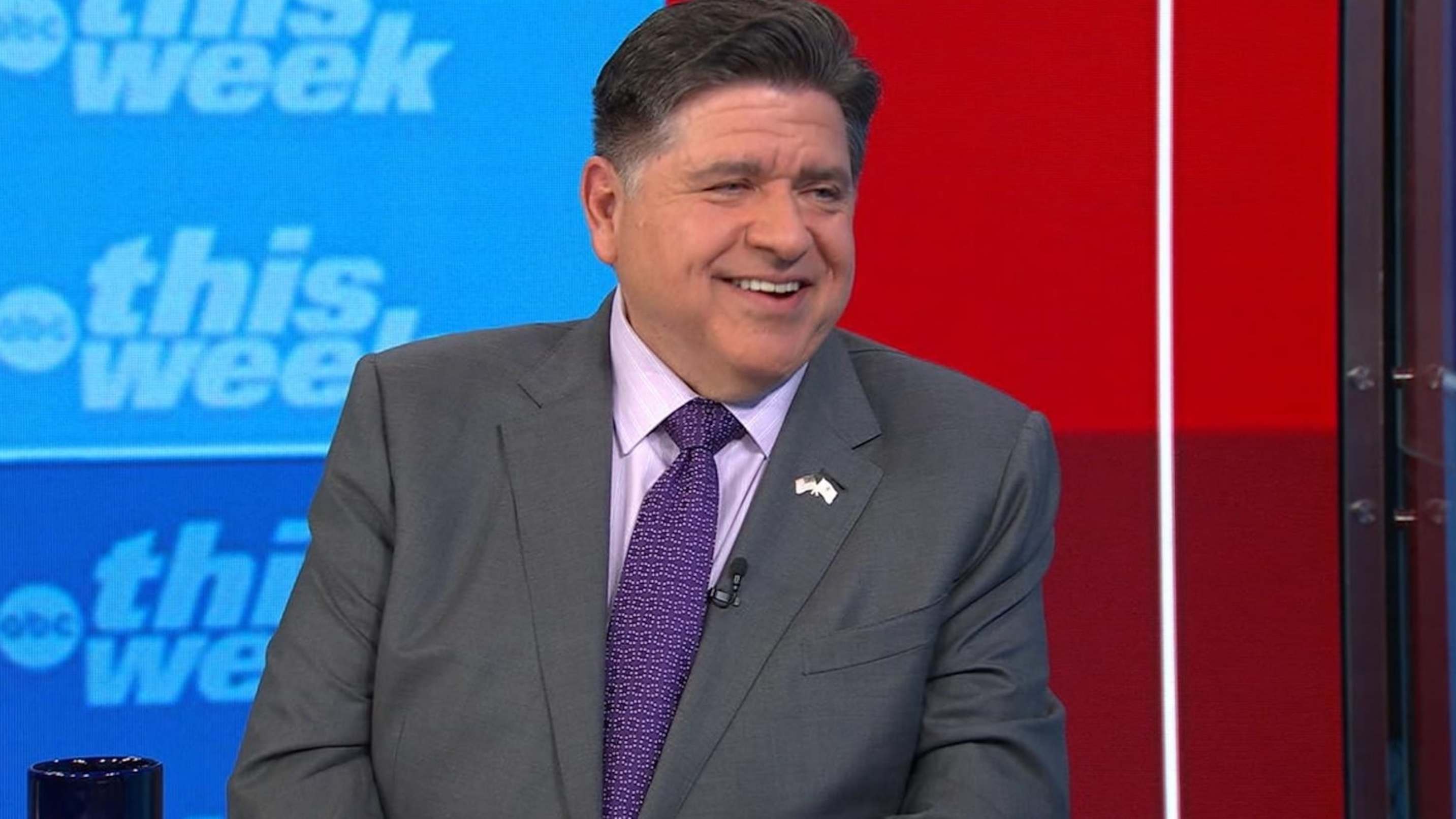
With calls to regulate AI growing, Illinois Gov. JB Pritzker urged Congress to pass federal guardrails on the technology.
“You can't do this state by state. This needs to be a national effort as well as an international endeavor, especially together with our allies, because AI is not going to go away,” Pritzker told ABC “This Week” co-anchor Jonathan Karl in an exclusive interview that aired Sunday.
Pritzker touted legislation he signed in Illinois in July requiring AI companies to conduct annual third-party audits of their safety plans and disclose safety incidents to the state. He urged Congress to make federal regulations a top priority, calling the technology “dangerous on the level of nuclear weapons.”

President Donald Trump has called AI fears a “hoax” and announced he is forming an “AI Force” to accelerate growth in the industry. Pritzker said that approach is a mistake.
“They are okay with just letting it, you know, run rampant and let the leaders of it self-govern and self-regulate, and I think that's a mistake because we clearly have seen that there are breakouts that they don't control, and they haven't had any real interest in it,” Pritzker said. “We don't need to shut it down entirely. What we need to do is make sure it doesn't get out of control.”
But Pritzker said he doesn’t support Sen. Bernie Sanders’ proposal to ban superintelligence.
“I think that you're not going to be able to is the point,” Pritzker said. “That's not going to happen because it's not like AI doesn't exist in the world already.”
With less than seven weeks remaining until the midterm elections, AI has emerged as a political issue for both parties, but it is far from the only issue on which Democrats are looking to go on offense.
Trump says he will form new 'AI Force' but continues to call AI fears a 'hoax'While Pritzker is running for reelection as governor, he is also supporting Democratic candidates around the country. Pritzker said his party is promoting a message focused on mitigating rising costs by giving Americans more money, partially by raising the minimum wage.
“Democrats are fighting to lower costs, and we're fighting to put money in people's pockets,” Pritzker said. “Remember, it isn't often that prices go down. What we really need to do to make things more affordable, put more money in people's pockets, and that means raising the minimum wage.”
During an appearance on the “All In” podcast Wednesday, Vice President JD Vance urged voters to “give us another chance.” Pritzker pushed back against the comment.
“The problem is they've had too many chances already, and they've made mistakes over and over and over again,” Pritzker said. “They don't deserve another chance. It's time to give Democrats the reins, at least in Congress right now, so that they can put a check on what Donald Trump has been doing to working families.”

Democrats are favored to take back the House in November amid poor approval ratings for the president and recent polling showing them far ahead in the race to control Congress. But some of those same polls also show that congressional Democrats, and the party itself, are very unpopular.
Asked about the Democratic party’s standing, Pritzker pointed to a general distrust in government.
“People don't trust government and they don't trust that their problems are going to be addressed. I believe that if you're going to regain the trust of the public, it's got to be about delivering for them,” Pritzker said.
“One of the reasons Donald Trump won the first time around was because he was promising to blow it all up. Right? He was going to drain the swamp,” Pritzker added. “And why were people looking for it? Because nobody ever did anything for them.”
In some states this cycle, Democrats were worried not only about beating Republicans, but also some fellow Democrats. Candidates from the progressive and Democratic Socialist wings of the party mounted several challenges to Democratic incumbents in congressional primaries this cycle, many of them successful.
Trump breaks with many Republican midterm candidates, voters on key tech issuesRepublicans quickly adopted the Democratic divide as a campaign issue, with some branding them “communists.”
2028 and Pritzker’s political future
If Pritzker wins reelection as governor, his term will end in 2029. But some speculate Pritzker will pursue a run for president in 2028, before the end of his term -- something he has not ruled out. However, Pritzker did not say whether he would run for president in 2028, telling Karl that he believes the Democrats have many other strong options.
“All I can tell you is that I believe we have some really great people who are contemplating running for president,” Pritzker said. “It may be the best bench that we've seen among Democrats for many, many years.”
“The question is, who's bold enough, right? Who's really putting [a] big agenda out there and has proven that they can get something done,” he added. “We've got to go fight for the people who have had nobody fighting for them for too many years.”
Gas prices are squeezing voters as Trump calls the increase a small price to pay 20 Sep 2026, 11:25 am
EDINBURG, Texas (AP) — Quinten Martinez, pumping gas under a hot South Texas sun, remembers a time when fueling up didn't require difficult decisions.
“Is it going to be groceries this week?" asked the 28-year-old Amazon delivery driver as he watched the numbers tick higher. "Is it gonna be getting gas in our tank to go to work?”
He shook his head when asked about President Donald Trump's assertion last week that higher gas prices are a small price to pay for the war with Iran.
“I don’t feel like it’s a good trade-off,” Martinez said. “I don’t feel like this is good for anyone.”
Voters across the country, and across the political spectrum, tend to agree.
Interviews with voters in several states, along with a fresh round of national polling, reveal an overwhelming sense of frustration that skyrocketing gas prices — a direct result of Trump's war — are creating serious and sustained financial hardships for America's working class.
The acute concerns are adding to a bad political environment that may be worsening for Trump and his Republican Party as early voting gets underway in the November midterm elections.
Historically, the party holding the White House has suffered major losses in midterms. Today, seven weeks before Election Day, Republican candidates at all levels are struggling with the additional burden of Trump's weak approval ratings, an unpopular foreign conflict and an affordability crisis that Trump and his congressional allies had promised to fix.
But when Trump campaigned in North Carolina on Wednesday, he played down the impact of surging gas prices.
“You have a little higher. It’s a very inexpensive price to pay for what we’ve done," Trump said of the war, which he describes as critical to prevent Iran from obtaining a nuclear weapon. "Remember that. It's a little more. Frankly, even if it was a lot more.”
‘Gas prices matter,’ Republican strategist says
Despite what Trump says, there are few things that may matter more this election year than the price of a gallon of gasoline, according to political operatives in both parties.
Gas prices are moving sharply in the wrong direction at a time of year when drivers typically get some relief. The national average for a gallon of gas reached $4.48 on Friday, according to AAA, up roughly 17 cents over the last week, 40 cents in a month and $1.27 from a year ago.
“Gas prices matter because they’re one of the few economic indicators voters experience and see in real time,” said veteran Republican strategist Chris Wilson. “The price is literally staring them in the face several times a week. So I wouldn’t minimize the frustration we’re seeing, particularly among working- and middle-class voters.”
Interviews with voters this week found bipartisan frustration and disappointment.
Democrats and independents were especially motivated to punish Republicans at the ballot box for their economic hardship, while some of Trump's working-class supporters pledged to support Republicans this fall, even if they weren't happy with the president's leadership on the economy.
Some Republicans say they're disappointed
Dan Lloyd, who voted for Trump, lamented the president's leadership as the 63-year-old carpenter paid $4.39 a gallon to fill up his pickup truck in Mesa, Arizona.
“He hurt himself stepping into this,” Lloyd said of Trump. “Where’s all this oil from Venezuela? I thought we were flush with gas and everything, but no. The American people eat it every time, whether it’s interest rates, food, gasoline.”
Still, he expects to vote Republican in the midterms.
“I think the Democratic Party has lost its way,” Lloyd said. "I just feel like the whole system’s on the verge of collapse.”
In sweltering Edinburg, Texas, 52-year-old Kristin Jimenez shrugged off the rising price of gas after filling up her Mercedes.
“We’ve paid the same price under Republican presidents, we’ve paid this price under Democrat presidents,” said Jimenez, a mother who runs a small business. She plans to vote for a Republican in because they’re the “lesser of two evils.”
She said gas prices aren’t part of her calculation.
“We don’t mind paying $8 for a cup of coffee at Starbucks, but we have a problem paying four bucks at the pump?” she said. “Make it make sense.”
More than 1,500 miles to the north in central Michigan, 35-year-old Garth Johnson is trying to make ends meet running a deep-cleaning business with several gas-powered vehicles and one machine fueled by diesel, which was $6.79 a gallon as he filled up his SUV.
Johnson voted for Trump, but doesn’t know what he’s going to do in November. Johnson doesn’t feel qualified to second-guess the president’s evaluation of the war, but he's feeling financial pressure in his own life.
“I like a lot of the things he’s done,” Johnson said, but added “I’m a little guy and I’ve got to live my life.”
Other voters are not so forgiving
Midterm voting was already underway on Friday in Virginia, where 60-year-old engineer Alan Johnson said Trump seems to have “no empathy” for Americans who are struggling financially.
“With the gas prices being what they are and continuing to grow, we’ve got to do something. Hopefully the Democrats can get into office and turn the ship around,” said Johnson, who cast ballots in the morning for Democrats for the U.S. Senate and U.S. House.
In Raleigh, North Carolina, teacher Brittney Bivins sees surging gas prices as evidence that Trump and his Republican Party aren't dealing with the issues that matter most to people like her.
“He really doesn’t care about everyday people,” the 45-year-old said. “He can afford the gas, but most of us can’t. So it feels like he’s not even connected to his own people.”
Bivins, who described herself as an independent, said she's eager to support Democrats this fall — especially the party's emerging democratic socialist wing.
At a gas station in Lansing, Michigan, Rina Risper spent $50 on 8 gallons of premium gas.
“When I rolled up I was in shock, actually, and said, well, maybe I should drink water instead of having that $4.99 bottle of whatever it was I was gonna get,” Risper said. She thinks Trump's tariffs will make affordability even worse.
“We’re not in Miami. We’re in Lansing, Michigan,” she said. “It’s really going to impact our people.”
Most voters think Trump's administration has made economy worse, poll shows
Nationwide, more than three times as many voters say they are falling behind financially as getting ahead, according to a Fox News survey released Wednesday. By a 15 percentage point margin, Democrats are considered the party that would better handle inflation and prices at a time when the cost of living and the economy are voters’ top concerns.
The Fox poll found that 61% of voters say gas prices are a major problem for their household, compared with 48% two years ago, while 52% say the same for healthcare costs, compared with 44% in 2024. Majorities also view housing costs and grocery prices as major problems, although neither has increased.
Overall, nearly two-thirds of voters (63%) say the administration has made the economy worse, compared with 52% in September 2025, including one-quarter of Republicans. Only 46% of Republicans say the administration has improved the economy, while about one-quarter don’t see an impact.
Back in rural South Texas, an area where Trump's GOP made gains in recent elections, Martinez, the Amazon delivery driver, could not contain his frustration.
Trump “likes to tout that we are the best economy in the world,” said Martinez, but in more rural towns, “you don’t see any of the winning, you don’t see any of the ups that he’s talking about."
"You just see struggles for day to day life," he said.
___
Peoples reported from New York and Cooper from Mesa, Ariz. Associated Press writers Allen G. Breed in Raleigh, N.C., Jacqueline GaNun in Lansing, Mich., Sarah Rankin in Richmond, Va., and Nicholas Riccardi in Mason, Mich., contributed to this report.
This article originally appeared on Associated Press at https://www.yahoo.com/news/politics/articles/rising-gas-prices-frustrate-voters-112510141.html
North Korea launches 2 missiles within hours of each other as tensions rise 20 Sep 2026, 11:07 am
SEOUL, Sept 20 (Reuters) - North Korea launched two missiles off its eastern coast on Sunday, its second set of tests in roughly a week and days after Pyongyang accused the US of driving tensions on the Korean Peninsula through a series of military drills.
Just three hours after launching a short-range ballistic missile (SRBM) toward the East Sea on Sunday afternoon, North Korea fired another short-range ballistic missile, according to South Korea's defence ministry.
If the subsequent launch is confirmed to be a ballistic missile, it will mark two consecutive ballistic missile tests by North Korea within a three-hour window.
South Korea's Joint Chiefs of Staff said it detected the first test firing from the Wonsan area around 3 p.m. (0600 GMT), identifying the weapon as a ballistic missile. Japan's defence ministry also said it appeared to be a ballistic missile.
Japanese public broadcaster NHK said the projectile had come down outside Japan's exclusive economic zone.
The first projectile flew approximately 450 km (280 miles) and is presumed to belong to the Hwasong-11 series, according to South Korea's military. The second short-range missile, which was also fired from Wonsan at about 5:50 p.m. (0850 GMT), flew more than 600 km (373 miles), it said.
"South Korean and US intelligence authorities have been tracking and sharing related developments from the initial stage of the launch, and have also shared information regarding the 'North Korean ballistic missile' with Japan," the South Korean Joint Chiefs of Staff said.
South Korea's National Security Council condemned the short-range missile launch, which follows a test on September 12. The council urged Pyongyang to immediately cease missile activity, warning the test directly violated UN Security Council resolutions.
Japan also lodged a protest through embassy channels in Beijing, according to a Nikkei report.
"This series of North Korean actions threatens the peace and security of Japan, the region, and the international community," Japanese Defence Minister Shinjiro Koizumi was quoted as saying by Nikkei.
On Saturday, North Korea dismissed a resolution by the UN nuclear watchdog against Pyongyang's nuclear programme.
Pyongyang last week also condemned a US-led naval drill which included South Korea and Japan and which ran from August 29 to September 10 near Guam.
North Korea's Kim Yo Jong, the influential sister of leader Kim Jong Un, on Friday blamed US-led military drills for "ever-worsening" tensions on the Korean Peninsula and vowed no change in the country's course to strengthen its nuclear arsenal.
(Reporting by Cynthia Kim and Heejin Kim in Seoul and Junko Fujita in Tokyo, additional reporting by Sumedha Mukherjee in Bengaluru; Editing by William Mallard and Michael Perry)
This article originally appeared on Reuters at https://www.yahoo.com/news/articles/north-korea-fires-missile-off-061756384.html
Ukraine targets Moscow with hundreds of drones in ‘largest ever’ attack 20 Sep 2026, 7:23 am
Ukrainian forces fired more than 1,000 drones at Russia overnight, including hundreds that were launched toward Moscow, officials said Sunday, as the Kremlin was wrapping up the third and last day of its parliamentary elections.
Moscow’s mayor described the wave of drones as the “largest ever” drone attack on the Russian capital and said there had been damage to the Moscow Oil Refinery, which is among several sites that supply the Russian capital, and a residential building.
Across the wider Moscow region, the attack killed two people and wounded 20, local Gov. Andrei Vorobyov said. The dead were a 74-year-old man and a 44-year-old woman, he said.
Writing on social media, Ukrainian President Volodymyr Zelenskyy said that Kyiv had used a range of missiles and drones in the attack — including Ukraine's domestically made Flamingo and Pelican missiles — to hit oil and logistics facilities.
"These are billions of dollars that sustain the war machine," Zelenskyy said, referring to the financial pressure that Kyiv hopes to put on Russia's economy.
Ukraine also continued to fend off Russian attacks, Zelenskyy said. A Russian drone strike hit a monastery in Ukraine's Kherson region Saturday, killing a member of the clergy and wounding four people, he said.
A Russian attack on the Ukrainian capital also killed two children and their mother on Saturday evening, said Tymur Tkachenko, head of the Kyiv regional state administration. He later said that another child wounded in the same attack had died in hospital on Sunday.
Russia votes in an election devoid of opposition
The attack took place on the final day of Russia's first wartime parliamentary election — balloting that has been virtually devoid of opposition to President Vladimir Putin’s policies and is all but certain to cement the Kremlin’s dominance.
Russia was also holding the vote in the four Ukrainian regions that Moscow illegally annexed after the war began but still doesn’t fully control, and in Crimea, the Black Sea peninsula that was illegally annexed by Russia in 2014. Kyiv has denounced the action as illegal.
In a Russian-occupied area of Ukraine's Kherson region, a Ukrainian attack killed a member of the local electoral committee, Russia's Central Election Commission said in a statement.
Russia’s Ministry of Defense said Sunday that its forces shot down a total of 1,110 Ukrainian drones across Russia, as well as over the annexed Ukrainian peninsula of Crimea and the waters of the Black Sea.
Moscow Mayor Sergei Sobyanin said that 450 drones had been destroyed en route to the Russian capital, and that the attack had damaged the Moscow Oil Refinery and a residential building.
He said the “unprecedented attack” on Moscow was an attempt to disrupt the elections. "The enemy failed in this regard," he said.
Since Russia’s invasion more than four years ago, Ukraine has become a global leader in military drone technology, deploying domestically produced long-range drones alongside missiles for strikes deep inside Russia. Its drone technology has impressed governments and defense manufacturers around the world.
Kyiv is aiming to make the Russian public feel the war’s consequences and pressure Russian President Vladimir Putin into negotiating a peace settlement. Putin has so far shown no signs he intends to stop the invasion.
Instead, Moscow and Kyiv have been drawn into an escalating duel of long-range aerial strikes as fighting along the roughly 1,250-kilometer (780-mile) front line in eastern and southern Ukraine has slowed, restricted by large numbers of drones and ground robots threatening troop movements.
___
Follow the AP’s coverage of the war in Ukraine at https://apnews.com/hub/russia-ukraine
___
An earlier version of this story was corrected to show that the Russian defense ministry said the total number of destroyed drones was 1,110, not 1,100.
This article originally appeared on Associated Press at https://www.yahoo.com/news/world/articles/ukraine-fires-over-1-000-072323482.html
U.S. fears rapid escalation in the Mideast after Houthis attack Riyadh 20 Sep 2026, 4:53 am

The United States warned Saturday that hostilities between Saudi Arabia and Iran-backed Houthis could "escalate rapidly" after a missile attack targeted Riyadh for the first time since the Yemen conflict resumed.
US President Donald Trump cut short a weekend at Camp David, a secluded presidential complex in rural Maryland, to return unexpectedly to the White House on Saturday.
The White House gave no explanation for the early return, which comes as a new threshold was crossed in the conflict between Saudi Arabia and the Houthis, who control a large part of Yemen and are fighting government forces backed by a coalition led by Riyadh.
Loud explosions rang out twice on Saturday in the Saudi capital, where AFP journalists saw a fuel tank bearing the logo of oil giant Aramco on fire near the airport.
"This military conflict has the potential to escalate rapidly," the US State Department warned, adding American citizens outside the Middle East should "seriously reconsider travel to and through the region".
The Houthis's lightning offensive seizing swathes of Yemeni territory in recent weeks has left hundreds dead and, according to the UN, displaced more than 110,000 people.
- 'Thwarted'-
These clashes and the subsequent hostilities with the kingdom have already disrupted Saudi Arabia's exports -- the world's leading supplier of crude oil -- as well as maritime traffic.
The Riyadh-led coalition confirmed Saturday evening on X that a ballistic missile launched by the Houthis towards the capital was "successfully intercepted and destroyed".
The coalition added that the pro-Iranian fighters had tried to target "civilians and civilian infrastructure" in several cities in the west of the kingdom, including the port of Yanbu on the Red Sea, an important export hub for Saudi oil.
It said these attacks were "thwarted by the Gulf monarchy's air defences".
Saudi Arabia has responded with scores of airstrikes on Houthi-held areas but failed to stop the advance.
The Houthis said it had responded to recent Saudi attacks by carrying out "two successful military operations using a large number of ballistic and cruise missiles and drones", Houthi military spokesman Yahya Saree said in a statement on Telegram.
"The first targeted sensitive sites in the Saudi capital, Riyadh, and the second targeted Aramco facilities in Yanbu."
Saudi authorities had earlier issued an overnight air raid alert.
Hours after the early morning alert, residents told AFP on condition of anonymity that they heard what sounded like a round of explosions echoing through parts of the Saudi capital.
- Lightning offensive -
This is the first time since Yemen's civil war resumed that strikes have threatened the Saudi capital, piling further pressure on a global economy already rocked by seven months of war between the US and Iran.
"The area is under a hostile aerial threat," according to a message received just before 3:00 am by Riyadh residents, urging them to stay indoors.
AFP journalists then heard two explosions, before the Saudi civil defence agency lifted the alert half an hour later.
"I heard the alarm, then my windows shook," a Riyadh resident told AFP. Another resident described the attack as "terrifying".
The incident comes days after Riyadh accused the Houthis of targeting Mecca on Wednesday, denouncing it as a "cowardly terrorist attack" on Islam's holy city, which welcomes millions of pilgrims each year. The Houthis strongly denied the accusation, calling it a "worn-out lie".
The group has reported scores of retaliatory strikes carried out daily by Riyadh since their offensive this month to take over the country's entire Red Sea coast, giving them control over the vital Bab al-Mandab strait.
The United States, according to US news platform Axios, last week refused a Saudi request to strike the Houthis.
Washington approved a $24.3 billion sale of 48 F-35 fighter jets to the kingdom on Thursday to help Riyadh "deter current and future threats", the US State Department said.
War in Yemen broke out in 2014 when the Houthis seized control of the capital Sanaa and other regions, triggering a military intervention led by Saudi Arabia in March 2015.
The fragile truce reached in 2022 between the warring parties collapsed in July, when the Houthis defied Riyadh's control of Yemeni airspace by allowing an Iranian aircraft to land in Yemen.
The apparent attack came as the Houthis improve their defences in newly conquered territory along Yemen's Red Sea coastline, with members of the group telling AFP they have been installing radar and digging tunnels.
burs-ane/abs
This article originally appeared on AFP at https://www.yahoo.com/news/world/articles/saudi-capital-issues-first-air-110320500.html
Trump's surprise 'AI Force' leaves tech industry searching for answers 19 Sep 2026, 8:39 pm
The tech industry is struggling to make sense of President Donald Trump’s surprise announcement that he is creating an artificial intelligence task force and appointing a czar to oversee the administration’s approach to the technology.
Trump, in alengthy Truth Social poston Saturday morning, said he was forming the government body and would also soon name an AI czar to lead it. He offered few details, leaving members of the tech world unsure what the task force would do, who would be involved or how it would operate.
Four representatives for the sector, who were granted anonymity because they were not authorized to speak publicly, told POLITICO that the industry was not widely informed of Trump’s decision prior to the Truth Social post.
“Nobody knows what the idea even is,” one of the people said. Another said that feedback on the idea was not widely solicited within the industry.
The White House did not immediately respond to a request for comment.
Several of those canvassed said they view the move as a response to growing public alarm at the developing technology’s potential risks. AI researchers at top AI labs in the past few weeks have issued stark warnings about the technology’s power to destroy humanity, while executives including Dario Amodei, Sam Altman, Elon Musk and Demis Hassabis have called for a slowdown so its risks can be adequately addressed.
“I think that he clearly feels pressure to say something, but he’s torn because he’s just spent the last few days saying that the whole thing is a hoax,” Adam Kovacevich, CEO of the progressive tech industry coalition Chamber of Progress, said of Trump and his prior dismissal of AI doomsday scenarios
Since the departure of David Sacks, who stepped down as the Trump administration’s previous AI czar earlier this year, the White House has been “making up AI policy as it goes,” Kovacevich added. “I think it’s clear they’ve really missed the presence of an organized leader like David Sacks was.”
One of the tech industry representatives said they were confused about whether the task force would be charged with formulating more AI regulations or recommending policies that would further stimulate the tech’s development.
Taylor Barkley, director of federal government affairs at the industry-aligned Abundance Institute, is eyeing it as a way to solidify a light-touch government approach to the technology he says will foster innovation.
“Any AI Force or AI Czar should have one job: keep the field open so entrepreneurs at every scale can compete, free from onerous regulation,” he told POLITICO. “Existing criminal and civil law can handle bad actors. New permission regimes will stifle the very activity America needs most.”
Trump’s post Saturday showed a clear desire to keep the industry booming: “We will not in any way hinder or stifle the Growth of this incredible Industry. Rather, we will cherish it, help it, and watch over it, as it grows!”
Trump’s comparison of the new AI task force to Space Force led at least one tech industry representative to speculate that the proposal could be led by the Pentagon. “Rather than use civilian agencies to regulate it, use the Pentagon to try and dominate it,” they said.
OpenAI, Anthropic, Google, Meta and NVIDIA did not immediately respond to a request for comment on the proposal.
John Hewitt Jones contributed to this report.
This article originally appeared on Politico at https://www.yahoo.com/news/politics/articles/tech-industry-scratches-head-over-203942505.htmlIn chaotic L.A. skies, news helicopter pilots juggle competition, camaraderie, risk 19 Sep 2026, 7:22 pm
For the record:
1:38 p.m. Sept. 19, 2026: An earlier version of this article stated KCAL's helicopter is owned by Angel City Air. It is owned by Helicopters Inc.
Whether it's a brush fire, a mass shooting, a car chase or the aftermath of a major storm, viewers in Los Angeles are used to getting the news from above.
Television news helicopter coverage has become one of the most important elements of any local newscast, with the high-flying helicopters roaring overhead a common fixture of breaking news scenes.
These images are so ubiquitous, it may have been easy to take them for granted, until Tuesday, when an NBC4 helicopter carrying reporter Eliana Moreno and pilot George Marciniw crashed while covering breaking news in Chatsworth. Both died, along with a bystander on the ground.
The tragedy has prompted soul-searching in the world of TV news helicopter pilots and focused attention on safety issues.
Pilots describe a high-stakes race in the skies of Los Angeles, with the TV stations battling to get breaking news on the air first. The airspace easily becomes crowded, and in the case of moving stories like car chases, a bit unpredictable and chaotic. The crews who take to the air in Los Angeles must not only navigate one another, but air traffic to three regional airports and smaller, local airstrips across the Southland when doing their job.
Read more: NBC4 chopper's final moments: A blaring alarm, loss of altitude and panic. Why did it crash?
They say that safety is always the top priority and that everyone in the air works together to avoid problems.
The NBC4 crash marks the most serious incident involving an L.A. news chopper crew since 2000, when a Fox 11 helicopter covering the Academy Awards crashed and burst into flames at Van Nuys Airport.
Nationally, National Transportation Safety Board data show that 16 people have died in eight fatal crashes involving news helicopters in the United States since 2000. A cause of Tuesday's crash has not been determined, but some experts have said they believe mechanical failure might be responsible.
"It crushed us all," said Tim Lynn, a now-retired helicopter pilot and reporter who flew for 16 years for KTLA-TV. Lynn worked with Moreno and knew how much she cherished her job.
"She loved the job so much that she put her all into it," he said.
Camaraderie, competition in the air
For all the camaraderie in the air, there is also some competition.
Stations want to be first to get to the scene of breaking news.
Kurt Deetz, a former news helicopter pilot who retired five years ago, said it's a difficult business to be in.
"It's very competitive, and at what cost?" Deetz said.
Read more: Dramatic recording could help answer why NBC4 helicopter crashed
News pilots tend to have plenty of experience, former pilots said, and dangerous incidents are rare. But Deetz said pilots are pushed to be out in the air first, get to the scene, and remain on scene for extended periods of time.
"If you can be the first on the scene, you're a hero," Deetz said. "I think about that now and think, that is so dumb."
Deetz started his career with KMEX in 1995, and worked for nearly every station in the area while working with Helinet, he said.
In the sky, reporters and pilots keep an eye out for one another, warning when one is drifting too close to another or if there is something else to keep an eye on.
"We all know each other," Lynn said. "Maybe we never met, but we've all talked on the radio and know the names."
There are unspoken rules that news helicopter pilots learn once they join, Lynn said.
During a police chase, for example, the first helicopter on the scene immediately takes the front position left of the fleeing vehicle, he said. The next helicopter takes a position behind that helicopter. The third takes a spot in the front right side of the chase, and the fourth sits behind it. All four maintain those spots throughout the chase, regardless of the turns and twists throughout the area.
And when the pursued begins to circle a residential area — a common occurrence during police pursuits — all news helicopters are expected to stop and hover in place, even if their shots are temporarily blocked by trees and buildings.
That's because the tight turns and circles could result in a crash if all helicopters remain in pursuit.
"You never move unless you say something," Lynn said. "It's a well-coordinated operation."
Read more: The tragic death of two SoCal news veterans is under investigation while friends and family mourn
Lynn remembers at least once when a new pilot joined in a pursuit.
"We were all stopped and he's just chasing the guy like he's the police," he said.
Lynn got on the radio and, as the other three choppers kept their position, Lynn asked him to stick to "one of the corners."
"That was a learning curve for that guy," he said.
But Lynn said there's respect for new staff and veterans in the field. Regardless of what station they work for, reporters and pilots are constantly helping one another, abiding by unspoken rules to keep them all safe.
'A dangerous place to be'
There is one maneuver that pilots say brings them particular anxiety.
Jack Cress, a former helicopter pilot for the Marine Corps and a helicopter accident investigation instructor for USC's Aviation Safety and Security Program, said news helicopters will often spend time hovering over an incident, sometimes at a low altitude.
"That is a dangerous place to be," Cress said.
For Deetz, he said he'd often say that he wouldn't hover low for extended periods of time, especially if he didn't see a place he could land in case of an emergency.
"You set up, get your shot, and then you move on," he said. "I made a point of saying, 'I'm not going to hover here for hours.' "
He knows the practice is still popular among current pilots, which he thinks needs to be rethought.
Read more: At least 5 dead in helicopter crash and bus accident in Chatsworth. Driver arrested
"In this day and age, there's no need to hover," he said. "Those cameras are so powerful. There's no need to be so low."
Helicopter pilots are trained to stay away from those conditions because, in case of trouble like engine failure, the lack of altitude and forward momentum gives the pilot little recourse. If the engine were to fail, for example, a pilot can sometimes perform an "autorotation" procedure to use altitude and forward momentum to force the rotors to turn, easing their descent.
The procedure is one that Lynn is familiar with. In 2012, he was covering an incident in Hollywood for KTLA when his helicopter started to smoke heavily. He had no idea until one of the other choppers radioed him to tell him.
"As soon as I turn it, he said, 'You need to put it on the ground now,' " Lynn said.
Lynn headed down and started getting the helicopter ready for an autorotation, as heavy smoke started to shoot from the engine. Lynn looked toward the ground and was eyeing Highland Avenue or Los Feliz Boulevard for a makeshift landing spot. He gripped the controls and expected the engine to give out at any second, until he spotted a parking lot. He watched for the wires, watched for the trees and set it down. The motor never gave out.
Pilots will constantly eye one another in the formation.
News helicopter pilots will normally stay around 1,200 to 1,500 feet above the ground, Lynn said. That is to stay above police helicopters, under commercial flights, and still have enough space in case they need to perform an emergency autorotation procedure.
Although news helicopters are touted as a cornerstone of local news broadcasts, the aircraft are owned and operated by third-party companies. KTLA and NBC4's helicopters, for example, are owned and operated by Angel City Air, part of Welk Aviation. ABC 7's helicopter is operated by Helinet, and KCAL's helicopter is owned by Helicopters Inc.
Many of them are flying the same kind of helicopter that crashed Tuesday, the AS350 B2, which aviation experts said is a popular helicopter for news stations and police departments.
Deetz said he flew that helicopter for his entire career in news, and never once had a dangerous mechanical issue.
'We all know each other'
It took minutes for word of the NBC4 crash to spread across the world of Los Angeles news chopper pilots and journalists.
"I immediately wondered who. We all know each other," Lynn said.
One of Lynn's former colleagues told him they saw a tail rotor on the ground, and Lynn quickly learned it was Moreno and Marciniw who were aboard.
A former police pilot for Huntington Beach and a retired news helicopter pilot after 16 years, Lynn said he and other pilots have shared the established rules with new pilots and reporters who joined the business over the years — including Moreno, whom Lynn said he helped train when she joined Angel City Air as a reporter.
Lynn remembers when she joined the company, he said. She quickly picked up on the equipment she had to use and eagerly sought advice to get better at the job.
The National Transportation Safety Board, which is investigating the crash, is expected to release a preliminary report on the incident in the coming days. A complete report on the incident is expected to take up to 18 months to be completed.
This story originally appeared in Los Angeles Times.
This article originally appeared on LA Times at https://www.yahoo.com/news/articles/chaotic-l-skies-news-helicopter-192237580.html'It will never be the same': How the Kennedy Center got stuck in a cultural quagmire 19 Sep 2026, 4:00 pm

When President Donald Trump’s name was ordered removed from the Kennedy Center this spring, it seemed that an opening to move on from his reign over the performing arts center might have emerged.
“I have instructed the Department of Commerce to make all necessary arrangements with Congress to allow a full and complete transfer of this Institution, giving them the responsibility for its Operation, Maintenance, and Management,” the president wrote in a late-May Truth Social post, seemingly relinquishing the control he’d seized a year prior.
Speculation even bubbled up among some of the more than a dozen “ex-officio,” board members — who don’t get a vote but are not allied with Trump — over whether the former board chairman, billionaire philanthropist David Rubenstein, could be brought back to help restore the center’s fundraising and programming, two sources familiar with the matter told CNN. (CNN has asked Rubenstein for comment.)
But after Trump said he would remain chairman, “it kind of all squelched pretty quickly,” one of the sources said. The hope that his crusade to rename a monument dedicated to the memory of John F. Kennedy had ended turned out to be wishful thinking.
Instead, nine months from a cold December day when cranes first placed Trump’s name on the marble façade, the institution has been brought to the brink by the president still very much engaged in a fight: lights have been turned off inside, infrastructure is crumbling and protests swirl while legal battles mount.
A lawsuit brought by Democratic Rep. Joyce Beatty of Ohio, an ex-officio board member, led to a judge’s ruling that Trump’s name had to be scraped off the building and that the board could not shut down the facility altogether.
Trump has only ratcheted up his threats to tear down the building in response to the legal setbacks: The president was seen with a poster this week through the window of Air Force One that appeared to read “Kennedy Center DEMOLISHED.” Though the federal judge has since ordered a 30-day notice be given before any major change happens, it’s not at all clear where things go from here.
Late Friday night, the administration argued in court that the Kennedy Center must close for two years, asking the federal judge in the case to allow it so that the “dangerously dilapidated and decrepit” building can be renovated.
On the same day, over a dozen Kennedy Center employees were laid off, including its lead spokesperson, according to two sources familiar with the matter — gutting an already skeleton staff. The Kennedy Center declined to comment on the cuts.

Trump has said previous leadership is to blame for the dire financial situation. During a contentious board call this week, he also blamed Beatty for bringing litigation that, he said, has contributed to the center’s downfall.
While the president and his allies on the board argue his name needs to be re-affixed to the building to revive fundraising, current and former officials, performers and industry officials say it is precisely Trump’s involvement that alienated the center’s donors and prompted scores of artists to cancel their performances.
“The Broadway productions will not come back, the artists will not come back,” said a source familiar with discussions about programming. “None of those donors will come back as long as Donald J Trump is the chairman.”
Current and former Kennedy Center officials, musicians, artists and other performers with ties to the center suggest that Trump’s takeover has added a permanent imprint on the Kennedy Center, whether or not his name ultimately ends up on the building.
“There are wonderful theaters throughout this country, and they are certainly part of the cultural ecology,” said LaRue Allen, president and executive director of the Martha Graham Dance Company, which has a 50-year history with the institution. “But the Kennedy Center — it is our nation’s capital. It is our national showcase.”
Another Kennedy Center source who recently left said simply: “It will never be the same.”
CNN has asked the White House for comment.

‘The Kennedy Center, they do a beautiful job, an incredible job’
Trump’s focus on the Kennedy Center is emblematic of a notable shift from his first administration to a second one that has targeted arts, cultural and educational pillars across the country, in addition to Trump’s unrelenting desire to remake the nation’s capital to his liking.
In his first term, Trump mostly avoided the venue, skipping the Kennedy Center Honors after awardees threatened to boycott the event if he attended. The White House even said in a 2017 statement that the president and First Lady Melania Trump were not participating “to allow the honorees to celebrate without any political distraction.”
And when the Kennedy Center initially received $25 million in funding in a March 2020 Covid stimulus package, Trump defended the aid, saying: “The Kennedy Center, they do a beautiful job, an incredible job.”
Nine months later, however, he singled out a $40 million line-item for the center while criticizing a subsequent December 2020 Covid aid bill — a foreshadowing of his future disaffection.
By his 2024 campaign, Trump made clear that going after so-called “wokeism” would be a pillar of a second presidency. He didn’t appear to single out the Kennedy Center on the campaign trail, but in his third week in office he’d already set a takeover plan in motion.
“At my direction, we are going to make the Kennedy Center in Washington D.C., GREAT AGAIN,” Trump wrote on Truth Social in February 2025.
Trump said he had fired Rubenstein as chairman of the board as well as board trustees “who do not share our Vision for a Golden Age in Arts and Culture.”
The takeover became the first domino in a cascade of Trump moves to remake the nation’s capital, including the demolition of the East Wing of the White House, the closure and remodeling of the busiest public golf course in Washington, DC, and his ongoing efforts to build a 250-foot triumphal arch near Arlington National Cemetery — projects all still being fought over in court.
Though Trump has widely criticized cultural institutions and museums, he’s been able to exert only so much control over them, primarily by reducing their federal funding. The federal government has gutted the agencies that fund the arts, including the National Endowment for the Arts and National Endowment for the Humanities, and denied and rescinded tens of millions of dollars in grants to organizations that don’t align with the president’s values.
But the Kennedy Center is one of the few cultural institutions where the president has been able to flex more of his power by seizing control of the board. He has similarly tried to bring the federally funded Smithsonian Institution to heel, with more uneven results.
A week after Trump’s board takeover, the president was named as its chairman, and he installed longtime loyalist Richard Grenell as executive director.

“So we took over the Kennedy Center,” Trump told reporters. “I’m going to be chairman of it, and we’re going to make sure that it’s good and it’s not going to be woke. There’s no more woke in this country.”
His new role prompted several cancellations, including most notably the Broadway show “Hamilton.”
Leading up to the center’s Kennedy Center Honors in December 2025, which Trump himself was hosting, the president began referring to the building as the “Trump Kennedy Center.”
On December 18, 2025, the board made that declaration official by voting to rename the facility the “The Donald J. Trump and The John F. Kennedy Memorial Center for the Performing Arts,” saying that the change honored Trump’s work at the center after taking over.
One day later, new signage was installed to add Trump’s name to the building’s façade.

A legal and financial saga
The legal battle and wave of cancellations that has ensued present particular challenges for an institution that makes part of its budget from ticket sales.
Operating as a non-profit, the Kennedy Center received roughly $37 million from Congress in the last fiscal year, according to the latest appropriations legislation signed into law. But the bulk of its revenue comes from programming and private donations. In fiscal year 2024, during the Biden administration, the Kennedy Center reported $307 million in revenues, according to documents filed with the IRS.
Last year, Grenell sought to revamp the center’s calendar to include, in his words, more family-friendly programming. He brought in “Dog Man: The Musical,” based on the popular kids’ graphic novel series, at the recommendation of second lady Usha Vance.
At the same time, the center became a place to host events that lean in to Trumpian ties, including the premiere of the documentary “Melania,” a Charlie Kirk memorial and the FIFA World Cup draw (where the organization gave Trump a peace prize).
But after Trump’s name was added to the building, a wave of performers pulled out, and ticket sales sagged. Multiple sources told CNN earlier this year that attendance at the Kennedy Center had been so low that for months it had to “paper the house” — a theater term that means to fill seats by offering free or discounted tickets.
“There was a haze of despair around the performances. Nobody was showing up to performances,” Carlos Simon, the Kennedy Center composer-in-residence since 2021, told CNN.
Simon, who is in the last year of his residence, noted that the National Symphony Orchestra is now playing at other venues in Washington. He said he’s stayed in his role at the Kennedy Center “for the morale of the folks who were still there trying to do the good work of presenting music.”
“I feel really bad that it’s become this political tool or pawn, but music still has to go on,” he said.
Amid the cancellations, Trump announced in February that the Kennedy Center would close for two years on July 4 to allow for renovations — a move critics suspected was to being made more to provide cover for the shrinking pool of patrons than because of the need for such a dramatic closure.
The Kennedy Center also received an influx of funding last year thanks to Trump’s “One Big Beautiful Bill,” which contained $257 million for the center to pursue “necessary expenses for capital repair, restoration, maintenance backlog, and security structures.”
Yet the board has argued only Trump’s help can muster the funds to renovate the building — and Trump has made clear his help will only come with naming rights.
In the meantime, Matt Floca, Grenell’s successor as executive director, this week told the judge in the Beatty case that the center needs to temporarily close due to safety concerns.
Even if the building survives, officials say getting the center’s programming to return — particularly Broadway shows — would still take months if not several years.
That is under the assumption, of course, that performances would be willing to return, said the source involved in the center’s programming.
“If we started now in terms of engaging with property companies, going back and forth and getting a deal made, we could have Broadway tours back at the Kennedy Center by the basically middle of ‘27 into ’28,” the source said. “That’s how long it takes for all these pieces to be put in place.”
CNN’s Katelyn Polantz contributed to this report.
For more CNN news and newsletters create an account at CNN.com
This article originally appeared on CNN at https://www.cnn.com/2026/09/19/politics/trump-kennedy-center
As midterms near, farm-state Republicans deal with the fallout of Trump's beef imports 19 Sep 2026, 4:00 pm
Farm-state Republicans don’t support President Donald Trump’s move to import cheap beef — but they’re still getting grilled for it.
Trump’s plan to combat sky-high beef prices by introducing discounted, tariff-free foreign beef has been widely condemned by ag-state Republicans who are concerned it will undercut the domestic beef industry and hurt ranchers, a normally reliable constituency.
And their opponents see an opening to paint Republicans as unconcerned about voters’ pocketbook concerns.
“Our ranchers and our farmers keep getting kicked in the teeth, and we have politicians that keep telling us that everything's great, that we’re the hottest country,” Dan Osborn, an independent running for Senate in Nebraska, said in an interview. “And to be quite frank, I'm pretty pissed off about it.”
Osborn’s state is one of the top four top cattle-producing states — along with Texas, Kansas and Iowa — all of which have more-competitive-than-expected Senate races this cycle. And Trump’s controversial plan to remove tariffs from 300,000 metric tons of imported beef, sold at 25 percent below current market prices, is doing Republicans no favors.
Osborn’s campaign went on air with a pun-filled ad this week in which he says the import plan is “selling out American farmers and ranchers,” and blasts Congress for being “too chicken to stand up to the corporations who bought them off.” The campaign says it plans to spend at least six figures airing the spot. It’s the first major spending from a campaign focused on the beef import plan. But it plays into a larger economic argument Democrats are pushing to break through with farmers and ranchers: Trump and Republicans have turned their backs on rural America, as a worsening farm crisis and spiking fuel and fertilizer prices pinch agricultural communities.
“It’s part of a wider frustration,” said an adviser to one of the farm-state GOP senators, granted anonymity to speak openly. “I don’t think it sways anyone’s vote, but it isn’t a great look. … It isn’t fun for me to read the headline. It’s frustrating.”
Sen. Pete Ricketts (R-Neb.), Osborn’s opponent, said in a statement he has a record of standing for his state’s agriculture community, “no matter who is president — from fighting Biden’s 30x30 plan to opposing this beef import plan.”
“Ranchers know the difference between a senator who delivers and a candidate reading a script his socialist ad agency wrote,” Ricketts said.
Farm-state Democrats and independents believe beef imports provide a window to speak to rural voters who have skewed red for decades but suddenly look more competitive amid Trump’s plunging political standing. A strategist working on Osborn’s campaign, granted anonymity to discuss strategy, said Osborn’s ad “codes as non-partisan in a way that running ads about taxes or healthcare doesn’t.”
Trump’s overall unpopularity is hurting Republicans across the map, but this policy could be especially problematic in a quartet of once-sleeper Senate races that could hand Democrats control of the upper chamber.
Spokespeople for the GOP nominees in Iowa and Kansas declined to discuss the issue, pointing to their candidates’ statements in August, when Trump’s plan was announced: Rep. Ashley Hinson (R-Iowa) called Trump’s plan a “bad idea,” while Sen. Roger Marshall (R-Kansas) said the priority should be growing the U.S. cattle herd, “not flooding the market with imports.”
Last week, during a debate at the Kansas State Fair, Democratic nominee Adam Hamilton slammed the import plan as “a slap in the face of all of our cattle ranchers,” earning a raucous response from fair-goers, and hit Marshall for “tepidly respond[ing] to it as opposed to shouting like hell that this is not okay.”
In Iowa’s agriculture-heavy first district, Democrats have been on the air since June with an ad hammering Rep. Mariannette Miller-Meeks for record-high beef prices” and other cost-of-living increases under the Trump administration. The Republicans who were already getting hammered for high prices before now are now hobbled by a proposed remedy — one that has infuriated their own base.
When asked how Republicans should message the beef plan back home, Sen. John Boozman (R-Ark.), chair of the Senate Agriculture Committee, acknowledged there’s “certainly a lot of concern amongst our cattle producers.”
“I think they understand what's going on. They're just not pleased with it,” Boozman said. “We're in contact with the administration, a lot of members are in contact, helping them understand the unintended consequences of it. We'd like to lower prices, but again, we don't want the unintended consequence of lowering cattle futures significantly.”
That leaves ranchers worried that the import plan will undercut their struggling industry.
“President Trump wants to lower the price of beef, I think that's where it's coming from,” said Ben Menges, a cattle rancher in Arizona’s battleground 6th District. “The best way that President Trump can do that is by lowering the cost of fuel, not by importing a bunch of beef.”
Some Republicans have looked to turn the conversation into a culture war issue — hitting their opponents for past stances on meat consumption or veganism.
Vice President JD Vance, during a visit to Iowa Friday — which Hinson did not attend — slammed Hamilton, the pastor-turned-Democratic nominee for Senate in Kansas, for having a “kind of a ‘gee whiz, I'm a nice pastor’ vibe” who tells his congregation to “repent for their white privilege while eating beef.”
It’s an attack Marshall made at last week’s debate, hitting Hamilton for a sermon he delivered on climate change and the impact of meat consumption.
“I think the senator needs to repent for not standing up for the beef industry,” responded Hamilton.
This article originally appeared on Politico at https://www.politico.com/news/2026/09/19/trumps-beef-plan-problem-nebraska-iowa-kansas-texas-01084910
Pentagon puts Iran war cost at $43.6 billion, with more bills to come 18 Sep 2026, 9:09 pm
WASHINGTON – The war in Iran has cost the U.S. military $43.6 billion as of Sept. 3, according to an update shared with congressional national security committees by U.S. Central Command.
The cost update, which was viewed by USA TODAY, is almost certainly an undercount. It does not include costs to repair buildings at U.S. bases across the Middle East that were damaged or destroyed by Iranian strikes during the war, including the U.S. Navy’s logistics hub in Bahrain.
The Pentagon estimated that it has spent $28.1 billion to replace expended munitions like bombs and air defense interceptors since the U.S. and Israel launched airstrikes on Iran on Feb. 28. The prolonged conflict in the Middle East has caused a shortage of critical munitions that could leave the U.S. vulnerable in other parts of the world, such as the Indo-Pacific.

More than 50,000 American service members have been deployed in Central Command’s area of responsibility to support the war. At least 18 Americans have died and more than 800 have been wounded since the start of the conflict.
The update also provided a breakdown of costs associated with each of the armed services.
It has cost the Navy $2.2 billion to operate multiple aircraft carriers and more than 20 warships. The Air Force, which has lost dozens of aircraft during the war, has spent $6.6 billion. An additional $1.6 billion in costs have been incurred by the Army.
The Pentagon did not respond to a request for comment.
The latest cost estimate of the Iran war comes just days after Rep. Thomas Massie, R-Kentucky, introduced articles of impeachment against Defense Secretary Pete Hegseth, accusing him of violating the Constitution by continuing military operations in Iran without congressional approval.
House Speaker Mike Johnson canceled votes and sent lawmakers home on Sept. 17 to avoid a vote on Massie’s impeachment effort.
In an interview with USA TODAY on Sept. 16, Sen. Tammy Duckworth, D-Illinois, called Hegseth “the most incompetent secretary of defense we’ve had in our nation's history.”
“He’s shown through his time in office how incompetent he really is and it continues to damage our national security and cost American taxpayers billions of dollars,” she said.
This article originally appeared on USA TODAY: The cost of the Iran war has risen to $43.6B, Pentagon tells Congress
This article originally appeared on USA TODAY at https://www.usatoday.com/story/news/world/2026/09/18/pentagon-reveals-cost-of-iran-war/91831856007/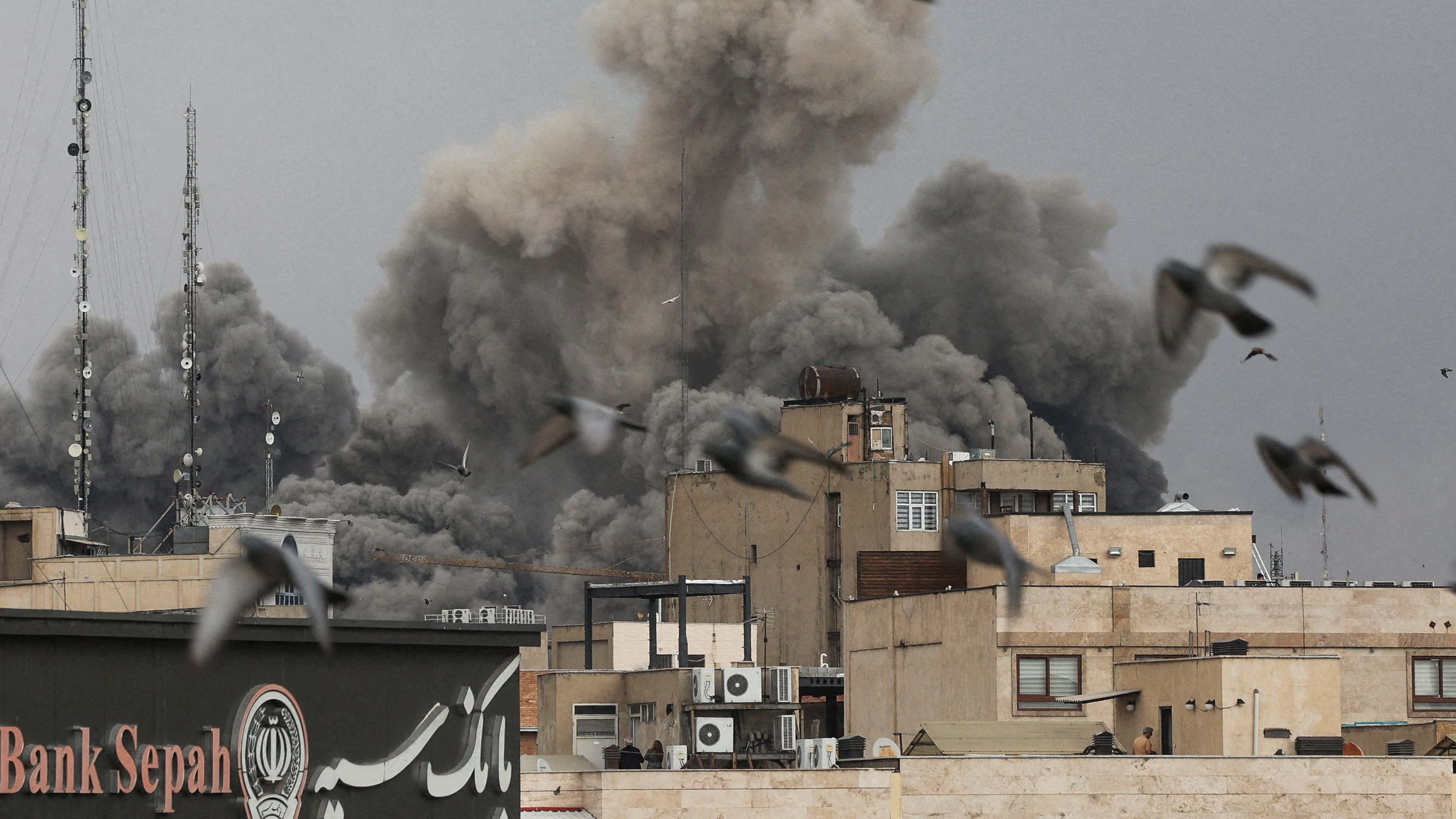
'Resident Evil' review: Zach Cregger's video game adaptation is easily the best 'Resident Evil' movie yet 18 Sep 2026, 1:21 pm

Ahead of the release of Zach Cregger's reboot today, there were already seven Resident Evil movies — six of them in a more action-oriented series starring Milla Jovovich, four of which were directed by her husband, Paul W.S. Anderson, plus an unrelated "reboot" in 2021 called Welcome to Raccoon City that went for more of a John Carpenter vibe and was an attempt to truly "adapt" the games. There's also a Netflix TV show version that ran for a single season in 2022. Countless other works in the horror genre have unofficially cribbed from the Resident Evil games over the years. It's an incredibly influential series.
And yet, Zach Cregger, hot off his Oscar-winning original horror film Weapons, is the first filmmaker to truly feel like he's adapting the experience of playing the games, arguably the scariest survival-horror ones ever made, rather than simply incorporating story and plot elements to explain the outbreak of infected people. In Cregger's hands, Resident Evil is pure crowd-pleasing popcorn cinema, best experienced in a packed movie theater with dozens of other people reacting loudly to the madness.
The premise couldn't be simpler — and the runtime a brisk 90ish minutes — as we follow a medical courier named Bryan (Austin Abrams, proving himself to be the Bruce Campbell for a new generation) who unwittingly finds himself fighting for survival as one fateful, horrifying night collapses around him in a swirl of chaos. Fans of the video games will recognize various easter eggs and nods to game mechanics, including the importance of conserving ammo and checking every last drawer for more of it.
But you don't need to be familiar with the games at all to enjoy the movie, which is an efficient horror set-piece machine that just keeps putting Abrams in increasingly concerning situations. I can't stress enough how much this is a one-man show anchored by Abrams, and he crushes it. He's in every scene, earning tons of laughs simply by reacting as a normal person would in this situation; he's a true audience-surrogate character, ushering us through the chaos. His comedic timing, paired with Cregger's assured camerawork and editing, is a match made in genre-movie heaven.
I didn't expect it to be so heavily inspired by genre classics like The Thing and Evil Dead. In fact, it's a better Evil Dead movie than the last several movies with "Evil Dead" in the title, nailing the horror-comedy tone that only Sam Raimi and a few others can pull off with aplomb. Cregger has a ton of fun with the various monstrous forms that the infected take here, from fusing multiple humans together to crafting his own horror take on a big, scary guy like Dune's Baron Harkonnen. Resident Evil movies have thus far treated the zombies as pretty traditional movie zombies; Cregger's version gets at the attempt to create the next stage of human evolution.
Zach Cregger's Resident Evil may not feature characters that gaming fans recognize, but it's spiritually more in line with the games than any of the ones that do. Adaptation stuff aside, it's also just a heart-pounding, adrenaline-fueled roller coaster ride of a movie that has no grander ambitions than getting a rise out of the audience over and over again. It's a blast, and this time, you can't pause it, put your controller down, and walk away when things get too intense.
Resident Evil is now playing in theaters nationwide
Get tickets
Strange bedfellows? Steve Bannon, Bernie Sanders join forces to fight AI 15 Sep 2026, 4:00 pm
From opposite sides of the political spectrum, Sen. Bernie Sanders and former Trump administration strategist Steve Bannon will both lead what they are calling a "pro-human" rally on Tuesday, Sept. 15, in D.C. to warn of the dangers posed by artificial intelligence.
Sanders, the Vermont senator and leading democratic socialist, and Bannon, the far-right media strategist and President Donald Trump ally, are an unlikely duo to share the stage in Washington, D.C., illuminating the AI concerns that are spanning both sides of the aisle. The event brings together AI experts, lawmakers and advocates to "share concerns about the technology breaking outside of human control," according to Sanders' office.
In the past week, after an Anthropic employee resigned, warning that AI could one day wipe out humanity, tech leaders and member of Congress have called for slowing down AI. On Monday, Sept. 14, lawmakers returned to Capitol Hill to find intense pressure on both sides of the aisle to act quickly. Senate Minority Leader Charles E. Schumer, D-New York, called for an immediate, all-senators classified briefing with Trump administration officials about their plans for AI regulation. The House, meanwhile, is planning to pass a bipartisan bill aimed at protecting Americans' energy costs from increasing because of data centers.
Bannon and Sanders speak out on AI
Bannon's "War Room" podcast on Monday, Sept. 14, discussed AI and features conversations with anti-AI activist Joe Allen during which the two spoke about the recent alarms and slammed tech "oligarchs" who Bannon said "can't be trusted at all."
"The American people are not going to be supplicants to these tech oligarchs who have run the deal and lied," Bannon said.
"They call us fearmongers," Allen alleged. "They called the doomers 'fearmongers,' but what they're trying to do is gin up fear of any kind of political response, any kind of public outcry or backlash because they are either heavily invested in these industries or they are using them to basically float as businesses."
Allen returned for an afternoon show and pushed back against the "Bernie Sanders superintelligence ban," in an episode titled "SANDERS MOVES TO BAN ASI" – or artificial super intelligence.
Sanders said on Sept. 10 in a post on X that he planned to propose legislation with Texas Rep. Greg Casar "to pause advanced AI and ban superintelligence altogether."
"When the future of humanity is at stake we need a PAUSE on advanced AI development and a ban on artificial superintelligence – an AI mind smarter than any human and capable of operating independently beyond our control," Sanders said on Sept. 12 in another X post, which also noted that tech leaders, including Elon Musk, "now agree that we must slow down the development of AI."
The event will also feature conservative lawmaker Sen. Marsha Blackburn of Tennessee, and two Texans on opposite sides of the political spectrum: Reps. Chip Roy, a member of the far-right Freedom Caucus, and Casar, a Democrat and chair of the Congressional Progressive Caucus.
Trump continues to side with AI
Trump continues to double down on his support for AI and controversial data centers, calling recent alarms on the technology a "hoax."
"I am the Hoax Buster, and I’m right now breaking another Hoax – That AI is going to take over, consume, and destroy the World, and that Robots will be marching into our Cities, and getting rid of us all," Trump wrote in a Sept. 14 Truth Social post. "This is even wilder than the RUSSIA, RUSSIA, RUSSIA HOAX, or the Global Warming Scam."
Contributing: Zachary Schermele
This article originally appeared on USA TODAY: Strange bedfellows? Steve Bannon, Bernie Sanders join forces to fight AI
This article originally appeared on USA TODAY at https://www.usatoday.com/story/news/politics/2026/09/15/steve-bannon-bernie-sanders-ai-data-centers-rally/91773127007/
Page processed in 0.541 seconds.
Powered by SimplePie 1.5.8, Build 20211224113046. Run the SimplePie Compatibility Test. SimplePie is © 2004–2026, Ryan Parman and Sam Sneddon, and licensed under the BSD License.