
Or try one of the following: Afterdawn, Ajaxian, Andy Budd, Ask a Ninja, BBC News, BBC China, Brent Simmons, CNN, Digg, Flickr, Google News, Harvard Law, iTunes, Japanese Language, Newspond, OK/Cancel, OS News, Phil Ringnalda, reddit, Romanian Language, Ryan Parman, Technorati, Engadget, Web 2.0 Show, XKCD, Yahoo! News, Zeldman
yahoo.com/news Top Stories
yahoo.com/news Top StoriesHe spent 11 months inside DOGE. Now he wants to set the record straight. 21 Sep 2026, 5:52 pm
Tyler Hassen’s initiation into Elon Musk’s Department of Government Efficiency, or DOGE, started as a series of tests.
The Houston oil executive says he was given vague instructions to show up at an unfamiliar D.C. address. He hastily packed three suitcases and flew east, taking an Uber to a building that he soon learned belonged to Elon Musk’s SpaceX. He was whisked to a private office, acutely aware that his tailored suit stood out among the hoodie-clad engineers “too locked in” to their laptops to look up. He was ordered to go through the website of the Department of Commerce and, within days, find two to five ideas to present to Musk.
He checked into a nearby J.W. Marriott and told his wife he didn’t know how long he would be gone.
Thus began an 11-month stint at the center of a national firestorm - an exhilarating, chaotic and sometimes scary experience, Hassen told The Washington Post, in his first major interview detailing his forthcoming memoir and plans. The memoir, “Inside DOGE: The Real Story From a Senior Insider,” which recounts his time working for the secretive cost-cutting group, is the first tell-all to emerge from one of the most controversial periods of President Donald Trump’s time in office - a moment Hassen said he would gladly live through again.
“There’s this misconception that we all just went in there and didn’t really think about what we were doing,” Hassen said, speaking virtually from a hotel room in San Diego. “I spent 24/7 thinking about it, waking up at 3 in the morning thinking, ‘Am I doing the right thing?’ … And I know I did.”
At the heart of the book is a split screen: For many Americans, Musk’s project was a callous showcase of bending government to a billionaire’s will, associated with tens of thousands of federal layoffs, reams of lawsuits, an AI-enabled effort to kill off wasteful contracts and the gutting of the U.S. Agency for International Development.
But Hassen’s memoir enters a different vision into the historical record: He portrays a period marked by a clash in worldviews, in which hard-core capitalists are granted unprecedented power to change a system that they argue operates under completely different incentives, logic and norms.
To Hassen, whose pre-government career involved turning around distressed companies, “DOGE was not radical,” he writes in the book. It was “not a wrecking ball, but a catalyst.”
In conversation, Hassen comes across as mild-mannered, a distant temperament from Musk, who famously brandished a red metallic chainsaw as a metaphor for cutting government waste. A 43-year-old dad with Boy Scout energy, he doesn’t cut the image of the nerd-engineer DOGE bro. He spent his entire adult life “hiring, firing, reorganizing and rescuing failing businesses” in industrial manufacturing and the energy sectors - a skill set that appealed to Musk, his longtime deputy, Steve Davis, and Baris Akis, a venture capitalist who served as a volunteer recruiter.
But for years, he seethed with rage over the national debt, now at $40 trillion. He felt angry that the amount the U.S. spends annually just to service that debt is more than the government spends on national defense and many other public benefits.
So he raised his hand - making a cold outreach to Musk through a network of business world connections, he said in the interview, and pressed the point.
“I’m staring at my daughter, who is 5, and thinking about her at 25 with $100 trillion of debt. And I know if we don’t do something about it now, we’re going to be there,” he said. “We’ve got to fix it now.”
By its own accounting, DOGE fell far short of the $2 trillion Musk claimed he would save, and an independent report from the Government Accountability Office has found DOGE’s own savings figures to be flawed. But Hassen told The Post he believes the effort was a success.
“Did we eliminate the deficit? No. Of course not,” he said. “But we made it on the top of everyone’s minds, albeit briefly, for a few months, that this deficit is something that we need to fix.”
In the book, he argues that “DOGE fit squarely” within a tradition practiced by some Democratic presidents, from Bill Clinton to Barack Obama, who also sought to shrink bloated government. DOGE was different, he goes on to concede, because of its speed, “faster than Washington was ready for and faster than its defenses could absorb.”
But Hassen insists that DOGE was not cruel, a word that appears six times in the memoir, often in relation to laying off federal workers. The refrain can read as a plea for reconsideration of an effort he argues was poorly understood.
“In the private sector, there’s an understood bargain,” he writes. “You’re hired to create value. If the value disappears, so does the job. It isn’t personal. It isn’t cruel. It’s the operating system of capitalism.”
Government, he argues in the book, runs on a different logic. Value is “presumed,” “permanence is the default,” and “the moral burden of proofs falls on anyone who questions headcount - no matter how bloated the system becomes.”
After the screening process, Musk and Davis deployed Hassen to the U.S. Department of the Interior, a sprawling agency that manages roughly 500 million acres of federal land and property, national parks, and tribal territories. He took the assignment, he wrote, because he knew “very little” about the agency and the challenge was appealing.
Hassen was eventually promoted by Doug Burgum, the wealthy businessman who heads the agency, whom Hassen described as something of a kindred spirit. He became acting assistant secretary of policy, management and budget and stayed on until November - months after Musk himself had left Washington.
During his tenure at DOGE, Hassen says, he put in 14-hour days, working nights and weekends. During the chaotic period he saw his then-4-year-old daughter only a handful of times. He said he relished the minutiae of the job: poring over grants written in what appeared to him to be bureaucratese, dissembling bloated org charts and consolidating departments.
He says he encountered a bureaucracy more labyrinthine and redundant than he could have ever imagined. He caught spelling errors in a project description written by a vendor charging hundreds of millions of dollars, which he saw as proof of a systemic malaise. The contract, he writes, “stopped me cold.” (To drive home the point, a photo of the paperwork with the spelling error is published in the book.)
He told The Post he was exhilarated to get deep into the bowels of the bureaucracy and deploy his corporate-honed skill sets to attack a problem that had long troubled him.
During his first week at DOGE, the team met in a sparse conference room on the top floor of the SpaceX offices - empty except for a giant American flag on the wall, “because it reminded us why we are here,” he told The Post. “We had billionaires to 22-year-olds who had dropped out of Harvard, all sitting there on our laptops working with public information - trying to figure out how we can help solve this deficit, this crisis that we’re in.”
As the group grew, the meetings moved to the Eisenhower Executive Office Building. There, he told The Post that he would present to Musk on a weekly basis, receiving the world’s richest man’s undivided attention. “He has this ability to grasp so many things, from California water, to certain contracts,” he said. “We would talk about certain departments for 45 minutes - and how can we fix this - and we’d stay until two in the morning.”
One time, after a particularly grueling session, Hassen said he had to sneak out of the White House grounds to sleep. “I was so tired,” he said.
During his time at Interior, Hassen was almost like a Where’s Waldo character, popping up in key moments that caught the country’s attention. When wildfires struck California, Hassen made an unusual decision to fly to the state to grill local officials about why the state’s largest water plant wasn’t running at full capacity.
The image of him at the Jones Pumping Plant in California became one of the first posts from the DOGE X account identifying its members - prompting a flood of hateful messages and threats to Hassen and his family, he said.
When Trump renamed the Gulf of Mexico, it fell to Hassen to officially register the rechristened Gulf of America in the Interior Department’s Geographic Names Information System - a move that then triggered a broader recognition of the name change on Google Maps and other online directories.
Hassen says he felt the difference in mindset between the public and the private sector every day. “It showed up in the way career staff spoke about ‘the workforce’ as something apart - almost sacred,” he writes. “Until we can say out loud that government is a workforce like any other - noble in purpose, human in composition, and subject to reality like everything else - reform will look like cruelty before it looks like competence.”
There is a clear cognitive dissonance between DOGE insiders like Hassen, who saw himself taking on a deeply patriotic project, and many Americans, who according to polls viewed DOGE disapprovingly.
Not surprisingly, Hassen believes the media is one culprit - treating “every reduction as a moral offense” and framing DOGE leaders’ demands for accountability as a “cruelty experiment,” he writes.
But, in the book Hassen reflects on how DOGE’s failure to communicate hurt its reputation.
Though DOGE was announced with great fanfare - and its website broadcast tallied savings - in practice the project was highly secretive, with DOGE members often showing up in agencies wielding great power before ever appearing on an org chart.
In the six months before the ill-fated cost-cutting effort imploded, its staff gave just a handful of interviews. Two, including one with Hassen, were on Fox News, and he told The Post he almost backed out. They were only done, Hassen writes, in response to prodding from then-White House Press Secretary Karoline Leavitt and Katie Miller, the political operative and podcaster who acted as a communications liaison for Musk’s effort.
DOGE members were private citizens, fearful of being personally targeted and unfamiliar with the media apparatus that is part of Washington culture, he says. But, fundamentally, the DOGE crew wanted to stay completely focused on the mission itself, he writes. The team was well aware that they needed to move with speed, as they might soon be slowed down by lawsuits, Congress or other bureaucratic forces.
“We were there to work. We weren’t there to be public figures,” he said in the interview.
In the book, Hassen implies that this was, to some degree, a miscalculation. “Once we stepped back, others were happy to define the work for us.”
Ultimately, DOGE did lose control of the narrative, leading to a dramatic split between Trump and Musk five months after DOGE began and leaving the project in the lurch. The night of that split, Hassen said he paced around the Interior Department like a ghost. The next morning, he went to the agency gift shop and bought his daughter a T-shirt which said “Future Secretary of the Interior.” He thought it might be his last night in D.C.
Hassen’s experience working with AI for the first time at DOGE led him to take a new job leading Zone Frontier, a former cleaning supply firm with a new mission to provide infrastructure and permitting to the data center industry. Musk’s longtime lawyer, Alex Spiro, has also joined the board of directors, something Hassen said was a pure coincidence.
He says he hopes that the legacy of DOGE will be that the country’s most gifted citizens will seek to serve their government. Instead of draining the swamp, he says he wants to flood it with talent and energy.
“These are some of the best and brightest we have in America,” he said of the DOGE team. “I’m honored to be even a part of them.”
Faiz Siddiqui contributed to this report.
Related Content
This article originally appeared on Washington Post at https://washingtonpost.com/technology/2026/09/21/he-spent-11-months-inside-doge-now-he-wants-set-record-straight/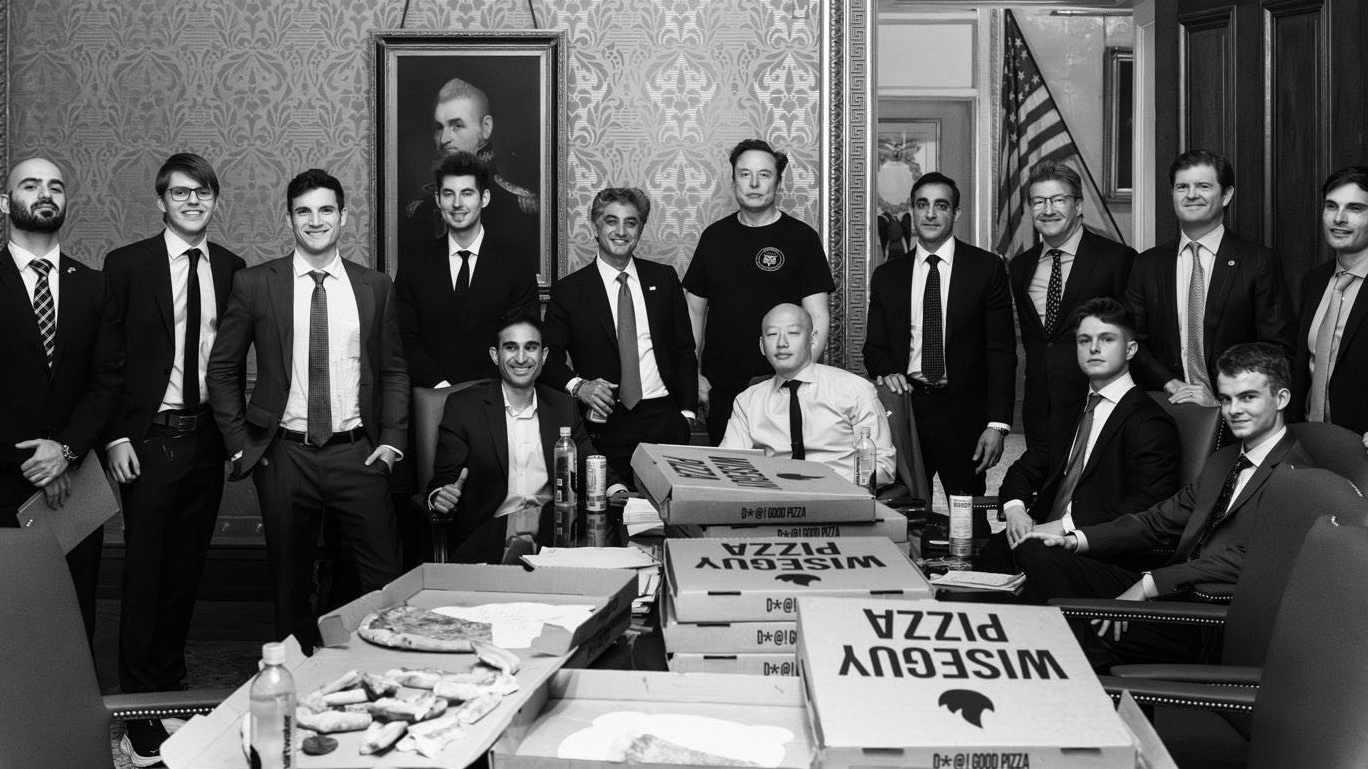
'Blatant violation' of rights: News outlets file lawsuit over Trump ban 21 Sep 2026, 5:52 pm
Three news organizations whose journalists were banned from the White House last week are suing President Trump and three of his top advisers in federal court, demanding that access for their reporters be immediately restored.
“This morning, we notified the government that we are filing a lawsuit today to protect our First Amendment rights and defend the principle that the government does not decide what the press reports or publishes,” CNN, MS NOW and Politico said in a joint statement on Monday. “Without notice or process, the White House revoked our journalists’ credentials because it objected to our reporting. Left unchallenged, this threatens press freedom and the public’s right to independent journalism free from government interference.”
According to the complaint filed in U.S. District Court in Washington, D.C., the news outlets allege that Trump and the White House are retaliating against them for coverage they dislike.
“President Trump has said in no uncertain terms that he would prefer only to be covered by news organizations and reporters who praise his administration,” the complaint states. “But the Constitution does not allow a president or any other government official to deprive the press of their First Amendment rights and liberty and property interests with no notice or process based solely on his dislike of the content of their reporting.”
The organizations argue that their reporters were not afforded due process and are asking a federal judge to quickly rule that Trump's ban is unconstitutional. The filing cites a 1977 ruling in which the D.C. Circuit Court found that the White House cannot arbitrarily deny a journalist a press pass without due process.
"This ban could not be a more direct assault on the First Amendment nor a more blatant violation of our most fundamental constitutional principles," the filing states.
Trump appeared to respond to the lawsuit in a social media post early Monday.
"The White House is not instituting an assault on the Free Press, something which I cherish. It is instituting an assault on the FAKE NEWS, something that has grown like Cancer in our beloved United States of America," the president wrote on Truth Social. "It is corrupt, purposeful, pervasive, fully coordinated, and totally out of control. It is a threat to our National Security, and must be stopped, NOW!"
How the ban unfolded

On Friday afternoon, Trump announced the ban in a Truth Social post, saying it was not prompted by any particular stories but was “a result of their constant ‘reporting’ FAKE NEWS!”
"It's really just cumulative stories over the last few years. You get sick of it," Trump said at an Oval Office event an hour later while explaining his decision to enact “the ban on the free press.”
“There’s something wrong with a country that can allow people to write purposely negative stories,” the president said. “If they want to write them, that’s fine, but I don’t have to let them into my, into the people’s house.”
On Saturday, reporters from CNN, MS NOW and Politico were turned away from the White House by members of the Secret Service and had their credentials — so-called hard passes needed for access — confiscated.
The journalists — CNN’s Betsy Klein, MS NOW’s Akayla Gardner and Politico’s Cheyenne Haslett — are listed as plaintiffs in the court filing.

The White House Correspondents’ Association condemned the move, saying it violates the First Amendment.
“The American people, through a free and independent press, must be able to scrutinize those elected to power, regardless of whether government officials view it favorably,” Jacqui Heinrich, Fox News senior White House correspondent and WHCA president, said in a statement. “That’s why courts have repeatedly held that once the White House provides access to journalists, it cannot deny that access arbitrarily or based on the content of their reporting.”
CNN, MS NOW and Politico are longstanding members of the White House press pool that provides rotating coverage of the administration and travels with the president.
CNN had been scheduled to serve as the television pool on Monday. According to Politico, the four other major TV networks — ABC, CBS, NBC and Fox News — are declining to participate in White House pool duties moving forward in response to the ban.
The daily guidance issued by the White House for Monday listed no primary TV pool, identifying Hearst and Real America’s Voice as the “secondary” TV crews for the president’s events in Washington and his scheduled trip to New York City for the United Nations General Assembly. Trump is scheduled to meet with New York City Mayor Zohran Mamdani and French President Emmanuel Macron on Monday afternoon.
The president vs. the press
U.S. presidents throughout history have complained about negative coverage of their administrations. In 2009, the Obama administration sought to exclude Fox News from a series of interviews with a Treasury Department official in the wake of the 2008 financial crisis, but backed down when the other major television networks objected.
Trump, however, has continued his adversarial relationship with the media, often referring to the press as the “enemy of the people.”
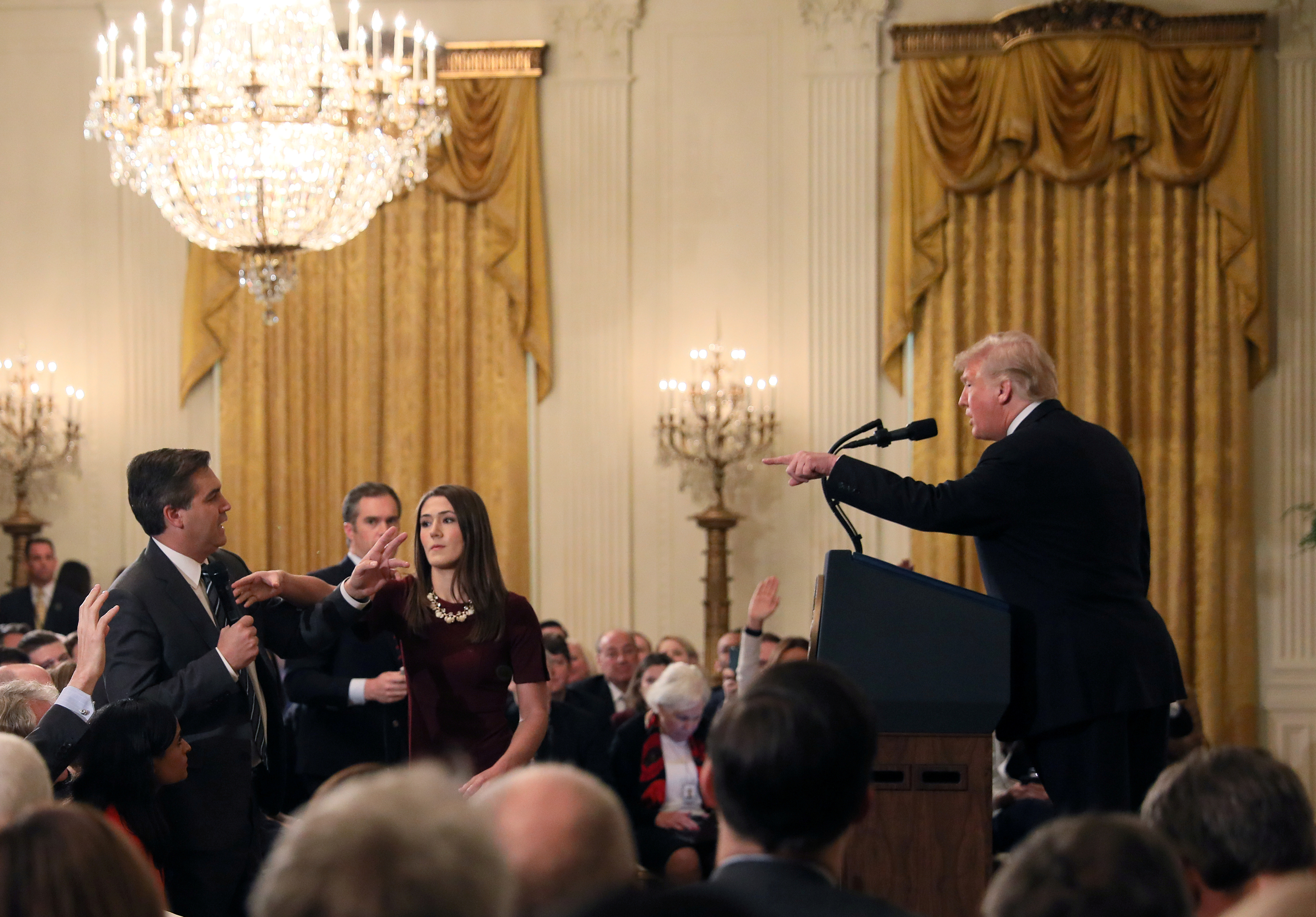
In 2018, Trump administration officials revoked the press pass of then-CNN White House correspondent Jim Acosta after they said he interrupted the president during a news conference. The network sued, and a federal judge ordered Acosta’s credentials restored.
A similar situation played out the following year when the White House revoked Playboy correspondent Brian Karem's press pass over a verbal argument between Karem and Sebastian Gorka, a former White House aide, at a Rose Garden event. A federal judge ordered the White House to restore Karem's pass.
Last year, Trump barred Associated Press journalists from the Oval Office, Air Force One and some official events after the news service declined to refer to the Gulf of Mexico by Trump’s preferred name, the Gulf of America. The AP filed suit and the case is ongoing.
This article originally appeared on Yahoo News at https://www.yahoo.com/news/politics/article/cnn-ms-now-and-politico-are-suing-trump-over-white-house-ban-155420637.html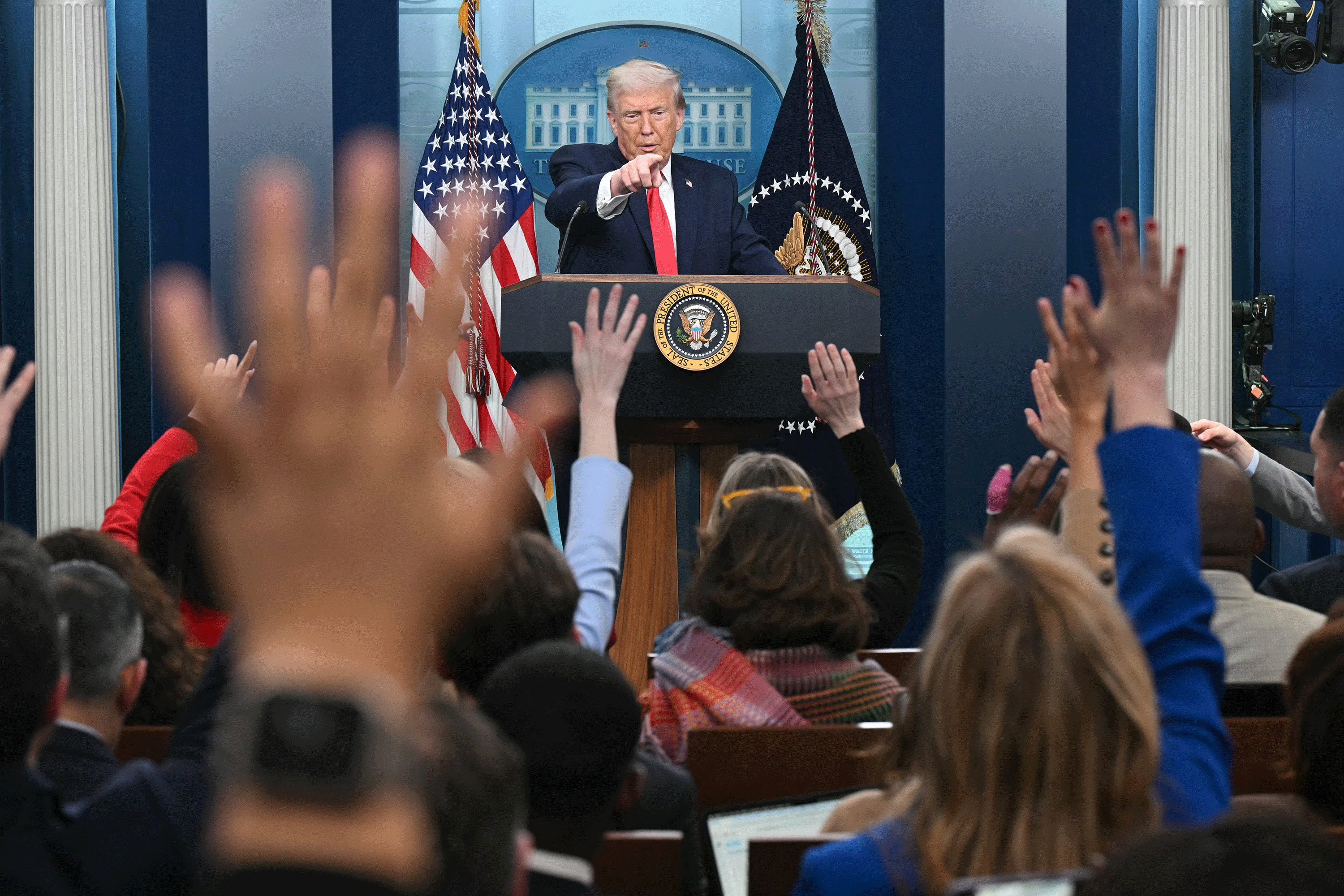
Houthis push for control of Yemen highlands as Trump reportedly calls off airstrikes 21 Sep 2026, 3:25 pm
By Mohammed Ghobari, Timour Azhari and Jana Choukeir
RIYADH/DUBAI, Sept 21 (Reuters) - Houthi fighters pushed to seize strategic heights in Yemen on Monday to cut off the Red Sea coast from remaining areas held by Saudi-backed forces, after a report that President Donald Trump had called off US strikes on the group at the last minute.
A lightning advance by the Iran-backed group this month has extended the wider Middle East conflict to a new theatre and further threatened global energy supplies. Washington has so far rebuffed repeated pleas from Saudi Arabia's Crown Prince Mohammed bin Salman to join the fight in Yemen.
The New York Times reported that the Trump administration had prepared to launch airstrikes on Sunday against the Houthis after fresh pleas from the Saudi crown prince. But the newspaper said Trump called off the airstrikes at the last minute, even as troops were loading bombs onto aircraft.
Reuters could not immediately verify the Times' report. The US military's Central Command referred questions to the White House. The White House did not immediately respond to an email seeking comment.
Rashid al-Alimi, the Riyadh-based president of Yemen's Saudi-backed, internationally recognised government, asked Trump by phone on Sunday for US military help, four sources told Reuters. Two of the sources, one Yemeni and one Western, said Trump made no direct pledge of support during the call.
Riyadh was apparently struck on Saturday for the first time since the escalation began, with explosions heard and smoke visible near the airport. The Houthis said they had fired missiles at the Saudi capital; the Saudis have not commented.
FIGHTING IN HIGHLANDS
The Houthis, who have controlled Yemen's capital since 2014, seized the country's Red Sea coast this month in an advance that routed forces of the Saudi-backed government.
Saudi Arabia has launched hundreds of strikes in recent days on the fighters' positions in the highlands, the Houthis say.
According to the United Nations, nearly 700 people have been killed and thousands injured in the flare-up in fighting. Nearly 130,000 Yemenis have fled homes within Yemen, and more than 3,000 have fled by boat across the Red Sea to Africa.
Five Yemeni military sources told Reuters the Houthis were now seeking to seize strategic heights, known as the Kahboub Mountains, in two provinces, Taiz and Lahij, which separate the Red Sea coast from the government-held south.
Fighting has centred on the outskirts of the remote mountain Al-Wazi'iyah district in Taiz province, and Ras al-Ara along the Indian Ocean coast between the Bab el-Mandeb Strait at the Red Sea's mouth and the government's base in Aden, the sources said.
"The government forces appear to remain largely in a defensive posture following the loss of the Bab el-Mandeb area, while the Houthis are seeking to maintain the momentum of their advance, despite being exposed to intensive air strikes," said Mohammed Al-Qadhi, a veteran Yemeni journalist now working as a political analyst.
"These mountains could become critical to determining whether the Houthis succeed in consolidating their recent territorial gains or whether government forces will be able to retain the positions necessary to mount a counteroffensive."
SAUDI OIL EXPORTS
The surge in fighting between Saudi Arabia and the Houthis creates a dilemma for Trump, under pressure to help Saudi allies but anxious not to further expand the deeply unpopular war he launched as "Operation Epic Fury" in February against Iran.
The United States bombed the Houthis for two months in early 2025, but Trump called off those strikes after reaching a ceasefire, and has kept out of the Yemen conflict since.
The Houthis' Red Sea advance risks cutting off the main alternative route Saudi Arabia has used for oil exports that bypass disruption through the Strait of Hormuz.
Saudi Arabia has responded by increasing shipments through Hormuz, where a small number of tankers are increasingly shuttling back and forth to bring out oil, charging record fees of as much as a quarter of the cargo's value to brave the wartime risk. They then transfer the oil to other ships in the Indian Ocean, bound for customers in Asia or elsewhere.
Traders say Saudi Arabia has sold 60 million barrels of oil both this month and next, to be loaded from off Oman on the far side of Hormuz. Satellite data shows Saudi exports through Hormuz reaching 2.9 million barrels per day in recent days, up from just 700,000 in August.
That has helped put a cap on the global price of crude, which has retreated closer to $100 a barrel after approaching $110 last week. But consumers and industries are still paying record prices for some refined fuels, with the US retail price of diesel hitting another all-time high on Monday.
In the latest reported attack in Hormuz, Britain's UKMTO maritime security agency said a ship sailing into the strait had been hit with a projectile, causing minor injuries to crew. It also said it had learned of an earlier strike on a gas tanker.
Diplomacy in the wider conflict has largely been stalled since a June interim agreement between the United States and Iran collapsed within weeks. Iran's President Masoud Pezeshkian is due to fly on Tuesday to New York to attend the UN General Assembly.
(Reporting by Mohammed Ghobari, Timour Azhari in Riyadh, Jana Choukeir in Dubai and Reuters bureauxWriting by Peter Graff; Editing by Jon Boyle and Andrew Heavens)
This article originally appeared on Reuters at https://www.yahoo.com/news/articles/houthis-push-control-yemen-highlands-110616361.html
Patrick Clancy opens up about forgiveness, grief and starting a new family 21 Sep 2026, 2:52 pm
Patrick Clancy spoke about coping with the deaths of his three children and how he has started rebuilding his life in his first televised interview since his ex-wife Lindsay Clancy's murder trial,
The case has drawn widespread media attention, with the former labor and delivery nurse facing murder charges over the deaths of her three children — 5-year-old Cora, 3-year-old Dawson and 8-month-old Callan — whom she admitted killing on Jan. 24, 2023.
In an extensive interview with 60 Minutes aired on CBS News Sunday, Clancy said that at one point he "didn't think I would live to see my 35th birthday," as he struggled with grief. He said that he still dreams about his children, telling interviewer Ross Douthat, "it's like I'm lucid in those dreams."
Clancy also discussed how he met his now-wife, Dr. Rachel Danis, who also appeared in the show, and said false online conspiracy theories about his involvement in his children's deaths were "deeply harmful to the legacy of my children." Clancy and Dr. Danis confirmed they are starting a family together.
Here are the key moments from the interview.
1. He and his new wife are having a baby
Asked by correspondent Ross Douthat whether the couple was "starting a family" together, Dr. Danis replied, "Yeah," with Clancy adding that he "can't wait" to tell any future children about their brothers and sister.
"I think every parent can agree, you have different relationships with your kids, but they're all your kids," he said. "And I can't wait to tell them about their brothers and sister."
On CBS Mornings on Monday, Douthat confirm that Dr. Danis was pregnant. "They are having a child," he said, acknowledging, "Maybe starting a family was too coy a way of asking it."
2. How Rachel Danis learned what had happened
Dr. Danis, a fertility doctor, married Clancy in April this year. Joining her husband for the interview, she said that she first met him at a running club in New York in January 2024.
She described finding out about his children while paying for coffee with Clancy during one of their meet-ups.
"Pat pulled out his phone to pay, and I noticed this adorable photo of children as the wallpaper," she said. "And I just asked, 'Who are those cuties?' And Pat said, 'Those are my kids.' And then I think I asked if they live in Massachusetts, and Pat said, 'They died.' And this is just at the cashier."
"I guess I had so many questions, and yet at the same time I didn't know exactly what to ask," she added.
3. He had a panic attack mid-testimony
Clancy, who was the first witness to testify at his ex-wife's murder trial, told the court that when he returned from picking up food and prescriptions, he found his three children in the basement after calling 911 for Lindsay, who had jumped from a second-floor window.
During the 60 Minutes special, he described having a panic attack mid-testimony and being put in an ambulance.
"I went to a back room, and I started having this massive traumatic panic attack," he said.
"My heart was pounding. And they put me in an ambulance. They offered me some medication, but I said, 'I — I don't want it, 'cause I want to go back and I want to finish this so I can be done with this.' And I went back and I finished the testimony."
Recalling the 911 call being played in court, he said that "testifying is very difficult."
"On the second day, a lot of that was focused on the night of January 24th. We did take a break right before they played the 911 call, which I knew was gonna be just horrific."
The account rebuts what some online theorists interpreted as Clancy's stoicism on the stand, which in turn fueled conspiracy theories that he was somehow involved in the deaths of his children. These theories continued even after Clancy's lawyer warned he would take legal action against those responsible.
Asked about the impact of the conspiracy theories circulating online, Clancy said, "It's painful to see. It makes it difficult to be in public, and it's possible that some of those people, after seeing lie after lie after lie, they start to believe it, and that's what we're left with."
He said that the conspiracy theories are "deeply harmful to the legacy of my children."
"It is a huge distraction from what really matters here, which is perinatal mental health. And it's done real harm to real people, myself included but also others," he added.
4. He didn't expect to survive his own grief — and forgave his ex-wife
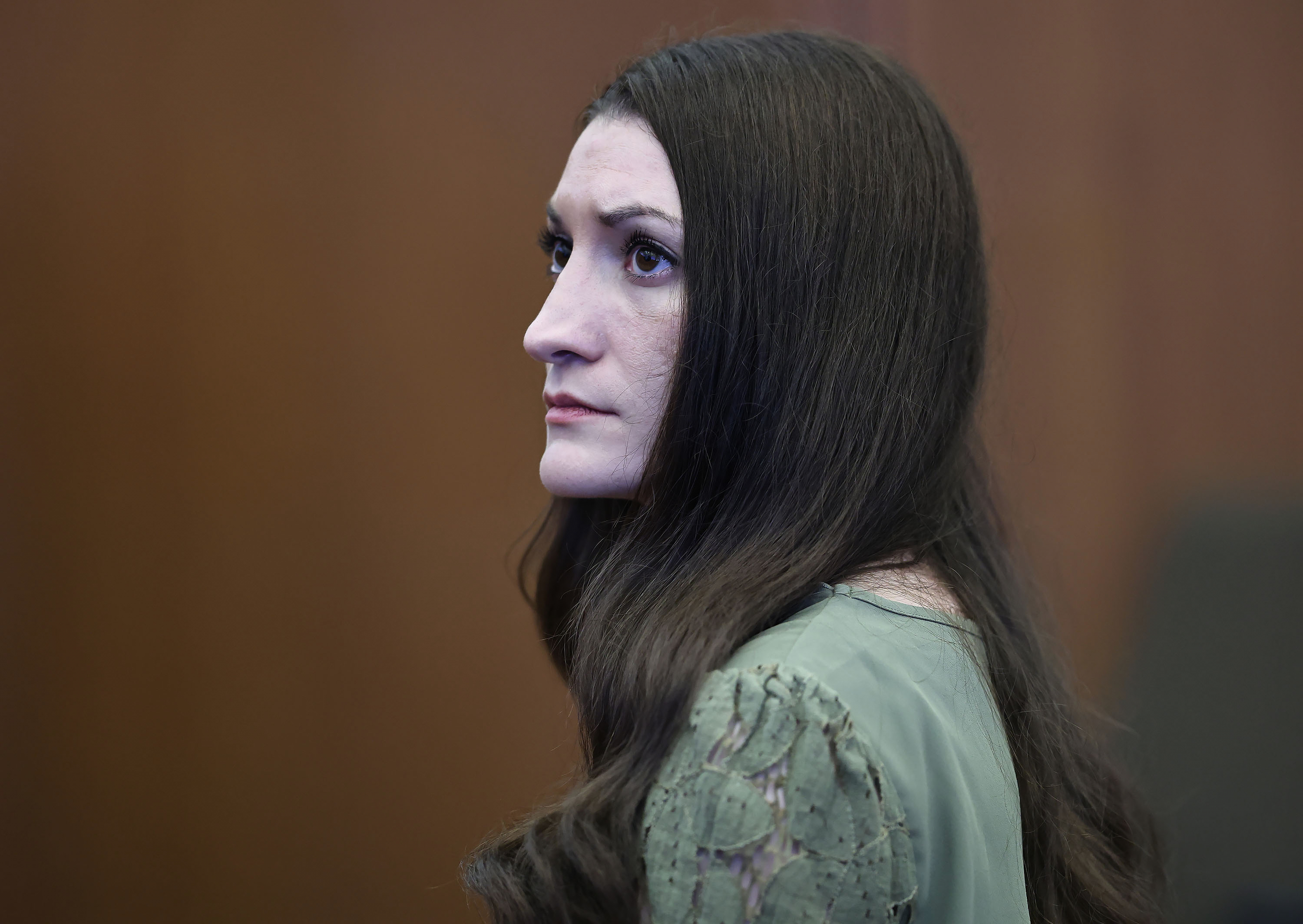
While Patrick and Lindsay Clancy are no longer married, Patrick Clancy told CBS he had forgiven his ex-wife for what happened to their children.
Asked if she had ever asked for his forgiveness, Clancy said, "No. But I gave it to her."
"I saw headlines that said, you know, 'Killer Mom,' and 'Baby Murderer,' 'Monster.' And none of 'em were accurate. I believe that it was her mental illness that caused that. So I shared those words.
"And I think when it comes to forgiveness, I also felt that if I didn't get there, I would be eaten up inside forever," he added.
In the weeks following the tragedy, as Clancy tried to come to terms with life without his children, he discussed feeling so low that he had suicidal thoughts.
"There was a time when I — I didn't think I would live to see my 35th birthday. And I was completely fine with it," he told the broadcaster.
5. Clancy's baby son died in his arms
Two of the Clancys' children — Cora and Dawson — were declared dead on Jan. 24, but 8-month-old Callan remained alive for a few more days after being airlifted to Boston Children's Hospital.
"I really thought there was a chance that Callan would live," he told 60 Minutes.
"I remember just thinking, 'Just gimme one. Just gimme one kid,' and I would raise him as best I could, and I would give him the best life I possibly could. I'd tell him about his brother and sister. And I was holding out hope for that.
"Then, when I got to the hospital, I saw the doctor. I saw the look on her face, and I knew that it wasn't going to be a good prognosis."
During his final hours with Callan, Clancy said he sat and wrote tributes to each of his three children, typing with one hand while he held his baby's hand with the other. He told the program that he was afraid that if he didn't write about them, they would be forgotten.
Callan's heart kept beating for four days before "he died in my arms," Clancy said.
"I'm so grateful for those four days that I had with him. And I'm so grateful he hung on," he said.
If you or someone you know is experiencing suicidal thoughts, call 911, or call the 988 Suicide & Crisis Lifeline at 988 or 1-800-273-8255 or text HOME to the Crisis Text Line at 741741.
This article originally appeared on Yahoo News at https://www.yahoo.com/news/us/article/patrick-clancy-and-his-new-wife-are-expecting-a-baby-his-1st-interview-since-the-mistrial-in-his-own-words-162425373.html
More than 1 million people urged to evacuate as Typhoon Dujuan nears Japan 21 Sep 2026, 9:34 am

Hundreds of flights were cancelled and more than one million people were under evacuation advisories in Japan on Monday as Typhoon Dujuan approached Tokyo, potentially bringing record rainfall.
Japan often sees strong typhoons in the late summer and early autumn, and other storms have already disrupted some events at the Asian Games being hosted in the country.
Dujuan was bringing winds of around 144 kilometres (89 miles) per hour on Monday as it moved to around 130 kilometres south of Katsuura City near Tokyo.
Japan Airlines cancelled 135 flights and All Nippon Airways scrapped 140, while more than 9,000 households near Tokyo were without power.
More than 1.6 million residents in and around the capital were urged to evacuate, according to the Fire and Disaster Management Agency. The evacuations are not mandatory.
Landslide warnings were issued for Tokyo as well as for Chiba, Kanagawa and Shizuoka prefectures. Railway operators in Tokyo and neighbouring regions suspended services on some lines.
In areas where warnings have been issued, "there's a risk the rain will continue as the typhoon moves north", Takuya Hosomi of the Japan Meteorological Agency (JMA) told reporters.
The JMA warned on Sunday that rain and winds were expected to intensify even before the typhoon's arrival.
"The total rainfall through Tuesday could exceed the average monthly rainfall for September, resulting in record-breaking heavy rain," the agency said.
One person has already been mildly injured and nine houses have been damaged due to the typhoon.
Dujuan also forced the early closure of the Tokyo Game Show, one of the world's biggest video-game trade fairs, on Monday, its final day.
A major outdoor music festival and a baseball match both scheduled to be held in Chiba were also cancelled.
Social media posts showed images of roads in front of Kamakura station, a popular sightseeing spot, were flooded.
"There is flooding in various parts of the city, so travelling by car is dangerous," Kamakura City Mayor Takashi Matsuo said on X.
nf/mjw
This article originally appeared on AFP at https://www.yahoo.com/news/weather-news/articles/flights-scrapped-evacuations-urged-typhoon-093422733.html
Elon Musk's spending draws additional attention to Texas Senate race 21 Sep 2026, 9:02 am

The last time Elon Musk sank money into an election, he played a starring role in the 2025 state Supreme Court race in Wisconsin. He donned an oversized cheese hat, offered $1 million checks to voters, and he and affiliated groups poured at least $20 million into the contest.
In the end, the conservative candidate lost by 10 points in what was widely viewed as a rebuke of Musk and the Trump administration.
Now, the richest person in the world is back boosting Republican candidates in critical midterm elections, including a bruising Senate race in Texas where Republican Attorney General Ken Paxton is facing Democrat James Talarico, who had initially far outraised him and remains close in polling.
But that financial tide is quickly turning — with Musk’s help.
Unlike in Wisconsin, Musk has so far stayed out of the spotlight in Texas, even though he lives in the state, has based his companies Tesla and SpaceX there, and employs about 20,000 people. He hasn’t announced plans for any in-person events, or teased — as he did in Wisconsin — that he’d be handing out $1 million checks to voters.
Privately, Republicans say they want Musk to keep his distance. In interviews, more than half a dozen Republican strategists involved in the Texas Senate race say they hope Musk follows his 2024 model of electoral involvement, which led to a Republican sweep of the White House and Congress. Then, Musk spent more than $250 million on Donald Trump and his party.
Republicans believe Democrats will attempt to turn Musk into a boogeyman if he takes on a higher-profile role in Texas or other battlegrounds. One Republican consultant involved in the Texas Senate race said that was the perception in Wisconsin.
“He came in super late, and it was very public,” said the consultant, who, like others interviewed for this article, were granted anonymity to speak candidly. “Elon spending money became the story, which I think maybe was a mistake.”
A different Republican strategist involved in Texas campaigns said those around Musk learned from the experience.
“Did Elon bring some things to the Wisconsin race that hampered things? Probably,” the person added. “But I think they will adjust for that.”
Democrats, however, say they welcome Musk more publicly entering the fray in Texas.
“Elon, bring it. You’ve failed in Wisconsin. You’ll fail in Texas,” said Nathan Johnson, a Democrat running to replace Paxton as attorney general. “I’m not afraid of Elon bringing his political money here. All these policies favor him or people like him.”
An in-your-face Musk campaign would play into Talarico’s narrative that the real American divide isn’t left versus right but “top versus bottom,” with elites and billionaires exerting control over the working class, they say.
“James is running largely on costs and corruption,” Luke Warford, a Texas-based Democratic strategist and chair of the Travis County Democratic Party, said of Talarico. “The idea of the richest man in the world coming in late to try to buy the election and save Ken Paxton really plays into James Talarico’s argument.”
The Texas Senate race has all the makings of a contest that would attract Musk. The conservative narrative building against Talarico amplifies his past remarks in support of transgender people, including his comment that “God is nonbinary.” Talarico told Fox News he was being “provocative” and was trying to convey that one cannot use “human categories to define God.”
Musk has spoken publicly about his own transgender daughter, Vivian Jenna Wilson, saying she was “not a girl” and was figuratively “dead.” He also alleged that he had been “tricked” into authorizing trans-related medical treatment for her when she was 16. Wilson previously told NBC News that Musk was an absent father who was cruel to her as a child for being queer and feminine.
At this point, Musk’s America PAC has not said how much it will invest in Texas, but a person with knowledge of the group’s thinking indicated that as of now, the Paxton-Talarico contest was not slotted to receive more focus than other Senate or congressional races the group is investing in across the country, saying “every state and district where we are spending is a priority.”
To date, America PAC has spent nearly $5.2 million on digital ads, mail, live calls and pamphleting in Texas, but that number is expected to significantly climb.
In all, the super PAC has spent $14.7 million on congressional races, including seven Senate races and nearly three dozen House races. The group has spent the most money on the Texas Senate race, followed by nearly $3 million on Senate races in Ohio and Michigan.

National Republican groups long knew they would have to provide air cover for Paxton because of an initial fundraising disadvantage to Talarico, who had $21 million in cash on hand compared to Paxton’s $1.7 million at the end of June, according to campaign finance reports. Today, a flood of Republican money is pouring in from several sources and the balance has suddenly tipped in Paxton’s favor.
“America PAC is working in full coordination with the entire GOP apparatus and is investing in the states and districts that will decide control of the House and Senate,” America PAC spokesman Andrew Romeo said in a statement. “Our only priority is ensuring Republicans keep full control of Washington and stopping the lunatic left from bringing us back to the days of open borders, rampant crime, and woke policies.”
Paxton’s status as a scandal-plagued candidate who has been impeached and indicted — coupled with the fact he’s coming off a contentious primary against Sen. John Cornyn and much of the Republican Party establishment, aside from Trump — makes him among the most vulnerable front-line Senate Republican candidates in a state where Democrats have not won a statewide post in three decades.
After Trump’s late endorsement helped propel Paxton over Cornyn, groups like the Senate Leadership Fund, the super PAC affiliated with Senate Majority Leader John Thune, and the National Republican Senatorial Committee, were left scrambling. The election cycle budgets were, in part, built on the idea that Cornyn would not need nearly as much national fundraising help.
“Cornyn had his own fundraising machine, he could raise a lot of money on his own, so it was going to make things easier to cover other important close races,” said a Republican consultant familiar with the thought process. “I know they [Elon] are focused more on the ground game stuff. MAGA Inc. is on digital and mail. This pretty much turned out the way we thought it would. It’s an expensive endeavor and a team and multigroup effort.”

The pro-Paxton Lone Star Liberty PAC has pumped at least $15 million into TV ads that have included hitting Talarico on previous votes involving China.
So far, MAGA Inc. has spent $10 million in the state to help boost Paxton, its second-biggest single-state investment.
The group did not return a request for comment, but in an interview with NBC News last week, MAGA Inc. chief James Blair said the group had booked $10 million worth of TV ad time in Texas. Blair noted the previous disparity in spending, with Talarico and related groups pummeling Paxton on TV.
“The fact is Ken Paxton had $100 million spent against him in the primary,” Blair said. “Talarico had $0 spent against him in the primary, and that has an impact on candidate images that takes time to rectify. But the resources … have begun to be deployed now in earnest [and] will take care of that problem.”
A veteran GOP official directly involved in the race contended that the shift toward spending in Texas did not take away from other battlegrounds.
“This spending will not take away from other investments,” the official said. “This came from a collection of Texas folks very committed to making sure that seat remains Republican. They see the polling, and that James Talarico is so extreme. No one wants to see Texas turn blue.”
When asked about the onslaught of money headed toward Talarico, spokesman JT Ennis said, “Billionaire-backed dark money groups are lying about James because they’re scared of the people-powered movement we’re building to fix this broken, corrupt political system.”
This article was originally published on NBCNews.com
This article originally appeared on NBC News at https://www.nbcnews.com/politics/2026-election/elon-musk-texas-senate-race-republicans-rcna596670
U.S. floats AI warning system with China ahead of Trump-Xi summit 21 Sep 2026, 8:26 am

Top US and Chinese officials have discussed creating a new "notification mechanism" for AI incidents that could affect national security, Treasury Secretary Scott Bessent told reporters on Sunday.
Bessent made the comments after what he called "successful" talks with Chinese Vice Premier He Lifeng in New York.
The meeting came as US President Donald Trump and his Chinese counterpart Xi Jinping are due to hold a summit in Washington later this week.
AI has come under intense scrutiny in recent days after researchers warned of the potential risks posed by the technology and some of the industry's most high profile figures called for developers to take a more cautious approach.
"We think that, just like with any cross-border activity, that moving from opaque to more transparency between the number one and the number two AI powers in the world is very important," Bessent told reporters after the talks.
He said the meeting also covered other topics, including plans to "operationalise" a process to identify potential tariff cuts on goods called the Board of Trade.
A truce in the tariffs war between the world's two biggest economies is due to expire on 10 November.
The BBC has contacted the Chinese embassy in the US for comment.
Chinese state news agency Xinhua said the two sides had "candid, in-depth and constructive exchanges on key economic and trade issues", noting that they had discussed AI.
Bessent said in a post on X on Sunday that the talks "help lay the groundwork for President Trump to advance America's economic interests and deliver results for the American people."
The US and China are locked in a race to dominate the AI and technology industries.
In recent days Washington has faced calls to slow down the development of AI over fears abouts its potential negative impact on humanity.
Trump has largely dismissed those concerns, arguing that there are sufficient policies around AI and that the US cannot lose its edge to China.
He said earlier this month "whoever wins in AI, wins."
In May, when Xi hosted Trump in Beijing, ways to collaborate on AI was one of the issues the two leaders discussed.
Those talks ended with an agreement that China would buy Boeing jets and US agricultural goods in exchange for lower tariffs.
- AI poses huge risks to national security without guardrails, minister says
- Why Trump is all-in on AI despite the warnings

Gas prices are higher than they've ever been at this point in recent election cycles 21 Sep 2026, 8:26 am
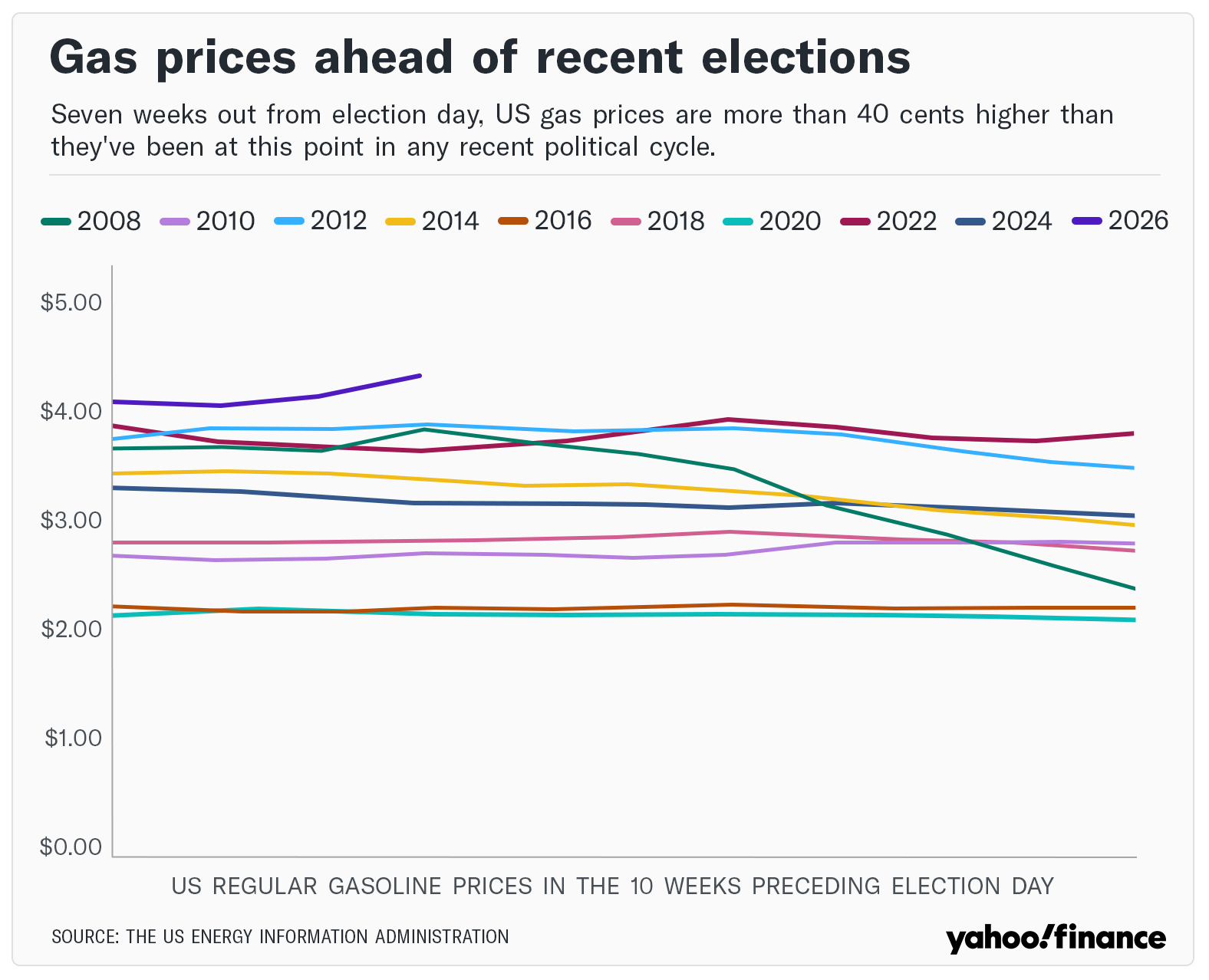
Another leg up in gas prices to begin September underscores the political headwind that President Trump and Republicans face on the issue, with less than seven weeks left before the midterm elections.
The average price of US regular gasoline was $4.32 per gallon last Monday, according to the latest weekly data from the Energy Information Administration (EIA), a nearly $0.25 rise over the last two weeks.
The EIA data, which goes back to 1990, also shows that gas prices are the highest they've ever been at this stage in any recent election cycle, according to a Yahoo Finance analysis.
The second-highest price on record at this point — 49 days from an election — came in 2012 when gas cost $3.88 per gallon. The third-highest price was $3.65 in 2022. Both were election years when a Democratic administration was in power, and Republicans put a heavy focus on the issue of pump prices.
"Gas prices are at crazy levels--fire Obama!" then private citizen Donald Trump posted to social media back in 2012.
With Trump now in office, gas prices are being pushed up by a variety of factors, including both the wars in Iran and Ukraine, and they're hitting as Trump has few options to lower them due to widening disruptions in the Middle East and the Strategic Petroleum Reserve at historically low levels after months of withdrawals.
Diesel, which broke through all-time high prices earlier this month and hit another record high last Tuesday, is yet another economic headwind.
'Anything but a typical year'
The historical data also shows that prices tend to decline in the run-up to election day — in keeping with fall trends — but this year may be an outlier.
Nonpartisan energy analysts are downplaying the chances of significant price easing in the weeks or months ahead.
"In a typical year, the consumer would see a seasonal decline in gasoline prices as refiners switched from the more expensive summer grade gasoline to the less expensive winter grade formulation," Andrew Lipow, president of Lipow Oil Associates, told Yahoo Finance.
But "this has been anything but a typical year," he said, noting that substantial price increases in gasoline and diesel could be felt across a range of consumer goods and are "wiping out the season savings that the consumer has come to expect."
GasBuddy's Patrick De Haan added in a recent blog post that the transition to cheaper winter-blend gasoline may help some, but "the scale of ongoing geopolitical escalations makes meaningful price relief unlikely in the near term."
"Motorists should brace for continued volatility ahead."
An acute problem for Trump
Current gas prices are more than 35% higher than the $3.18 level where they sat at this stage of the 2024 election, when then-candidate Donald Trump regularly assailed Democrats over the issue.
"We're going to bring your energy prices down," Trump promised at a campaign event almost exactly two years ago, one of countless times he slammed the Biden administration over the issue.
In recent days, he has repeated his frequent promises of relief at the pump, saying oil prices will "drop like a rock" when the war in Iran ends and insisting that Ukraine needs to stop attacks on Russian oil refineries.
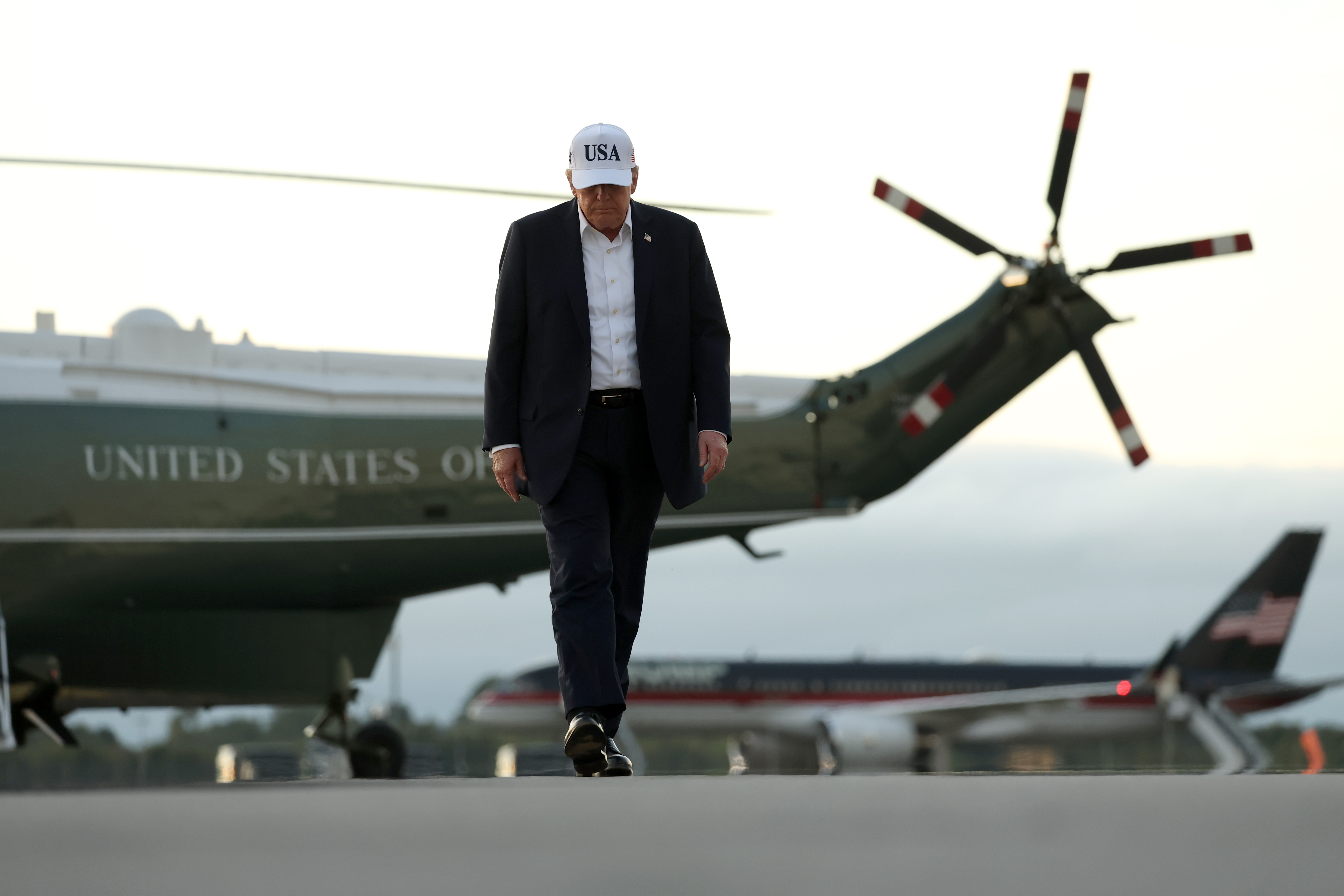
The president briefly drove down diesel prices last Monday with a Truth Social post that claimed both Ukraine and Russia had agreed to stop hitting energy targets. But the relief was short-lived when energy strikes from both countries continued.
Last Tuesday saw another all-time record price for diesel, according to the American Automobile Association, at an average of nearly $6.27 per gallon.
Trump is left with few options. Measures like restrictions on US oil exports energy experts have long suggested could backfire.
Some Trump aides have downplayed the chances of an export ban, but the possibility is being closely watched.
Charlie McElligott of Nomura Securities, in a note to clients, said an export ban could cut prices in the short term but lead to further price increases if refiners cut their capacity in response.
Such a move, he said, would be akin to a "bomb being dropped on the global Economy."
Ben Werschkul is a Washington correspondent for Yahoo Finance.
Read the latest financial and business news from Yahoo Finance
This article originally appeared on Yahoo Finance at https://finance.yahoo.com/energy/article/gas-prices-are-higher-than-theyve-ever-been-at-this-point-in-recent-election-cycles-185840023.html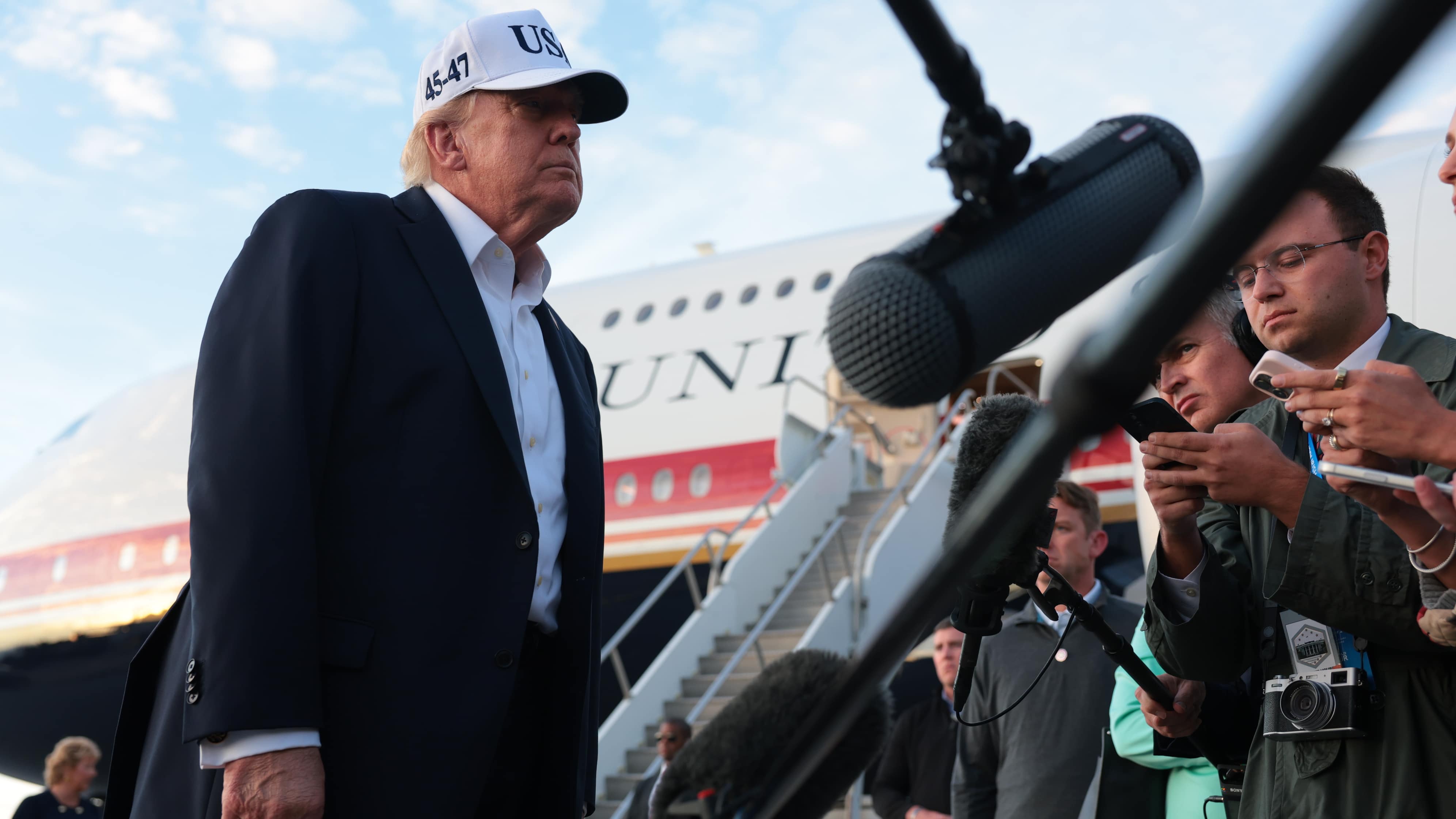
$68 billion in U.S. data center projects hit roadblocks as opposition grows 21 Sep 2026, 5:32 am
(Bloomberg) -- Opposition to data centers continues to mount in the US.
Most Read from Bloomberg
- Qatar Energy Chief Says Bessent ‘Wrong’ About Hormuz Future
- Saudis Give European Oil Buyers No Supplies for Next Month
- Qatari Premier Says Gulf States Have to Act Together on Iran
- Trump Drops a Legal Bid to Block Funding of Gateway Tunnel
- Merz Vows to Stay On After Record German Election Defeat
That’s according to research group Data Center Watch, which said some 45 data center projects worth $68 billion were blocked or delayed by local pushback between April and June this year.
Communities across the country are now pushing through moratoriums on new construction, often before developers can apply for permissions. Some 30 statehouses introduced or adopted rules pertaining to issues such as data center siting, electricity and water, the group said in a report Monday provided to Bloomberg News.
The research quantifies growing concern about the rapid pace of expansion of artificial intelligence, both in the construction of new computing clusters and its proliferation into daily life. There are now 843 opposition groups across 49 states, with Hawaii the exception.
“New groups continue to emerge, opposition is appearing across a wide range of states and jurisdictions, and online petition signatures continue to grow,” lead analyst Miquel Vila said. Data Center Watch is a project from AI intelligence company 10a Labs.
Home to the biggest investors in AI infrastructure, the US is experiencing a bipartisan backlash against facilities that critics say harm the environment and siphon away resources in order to fuel AI systems that many fear will imperil jobs and livelihoods.
Tech giants like Amazon.com Inc., Meta Platforms Inc., Microsoft Corp. and Alphabet Inc. — the so-called hyperscalers — argue they need the facilities to win a race against China to develop potentially world-changing AI. President Donald Trump has dismissed opposition to data centers and concern about advances in AI as a “sick conspiracy,” saying “the only one that is happy about it is China.”
The number and value of disrupted projects fluctuates by quarter, with the first three months of this year seeing 75 cases worth roughly $130 billion facing opposition in the US. The 45 projects affected during the second quarter represented more than half of all new large-scale developments Data Center Watch began tracking during the period.
Opposition by public figures and the use of social media are amplifying concerns. One petition against a project in Tennessee garnered over 500,000 signatures on online activism platform Change.org, accounting for more than one third of those on the service during the quarter, Data Center Watch said.
For the first time since it began its research two years ago, Data Center Watch also reported on protests against data centers outside the US, given increased international opposition. Much as in the US, local campaigns are targeting specific projects, governments’ planning authorizations and worries about resource usage, sometimes coordinating nationally. The group highlighted opposition across European nations, Australia, South Africa and beyond.
“As with many other trends, the US has generally been at the forefront, but the phenomenon is increasingly becoming global,” said Vila. “We anticipate that this will just become more prominent as data center development expands across the globe.”
Most Read from Bloomberg Businessweek
- Hating on Polyester Is Back in Fashion
- Fender Is Making Enemies With a Messy Fight Over Its Iconic Strat
- ‘Death Sentences’: Crafting America’s Favorite Countertops Is Killing Workers
- Trump’s Quest to Be Consequential Puts the Entire World at Risk
- What It Takes to Get Your First Job on Wall Street
©2026 Bloomberg L.P.
This article originally appeared on Bloomberg at https://finance.yahoo.com/technology/ai/articles/data-centers-worth-68-billion-053233556.html
Hunter faces manslaughter charge after mistaking woman for deer, police say 21 Sep 2026, 1:40 am
A 74-year-old hunter has been arrested and charged in a homicide investigation in which police allege he fatally shot a woman in Delaware whom he allegedly mistook for a deer.
Walter Moorhead of Salisbury, Maryland, was charged with manslaughter and related crimes after allegedly shooting the woman while hunting Friday evening in a field near Ellendale, Delaware, according to the Delaware State Police.
"The preliminary investigation revealed that the victim was walking through the field with a man and two children while Moorhead was hunting deer from a ground blind. Moorhead believed he saw a deer and fired his rifle, striking the victim," the Delaware State Police said in a statement.

The victim was identified Sunday as 39-year-old Santos Maria Chilel Soto of Georgetown, Delaware, according to the state police.
The incident unfolded around 7:40 p.m. on Friday, according to the state police, who said troopers who were called to the scene provided lifesaving medical care to the victim, who was later pronounced dead at a hospital.
Woman found dead in suitcase at Kansas fire station: PoliceTroopers took Moorhead into custody after a preliminary investigation "determined that he had fired the shot that struck the victim," according to the state police.
Mom, 5-year-old shot by gunman following them in another car: PoliceIn addition to the charge of felony manslaughter, Moorhead is facing three counts of first-degree reckless endangerment, as well as a count of possession of a firearm during the commission of a felony, state police said.
Moorhead was arraigned by the Justice of the Peace Court and released after posting a $43,000 cash bond, according to the state police.
Moorhead did not immediately return a call from ABC News on Sunday seeking comment at a phone number listed for him. It was unclear if he had hired an attorney.
The Delaware State Police said the shooting remains under investigation and asked anyone with information about the incident to call its homicide unit.

Powerful nor’easter takes shape with days of dangerous conditions for East Coast 20 Sep 2026, 10:53 pm
THE TAKEAWAY
- Days of dangerous conditions are expected through the workweek for parts of the East Coast as a nor'easter develops.
- The storm could bring high surf, strong winds, coastal flooding and severe beach erosion this weekend.
- Some areas expected to see wind gusts up to 60 mph, with offshore waves reaching 15 to 18 feet.
Parts of the East Coast will be battered by gusty winds and rain through the workweek as the first nor'easter of fall develops. The storm is expected to emerge off the coast toward the end of the week and could bring high surf, strong winds, coastal flooding and severe beach erosion through the weekend.
The system will begin developing Monday and continue through the weekend as a sharp fall cold front pushes off the coast, bringing rain to the Ohio Valley and parts of the Mid-Atlantic while strong high pressure builds to the north.
Strong northeasterly winds will develop across the offshore and coastal waters, producing powerful wind gusts.
Seas will rise rapidly, creating heavy surf and dangerous, battering waves along exposed beaches.
7 Facts You Should Know About Flash Floods
According to the FOX Forecast Center, persistent onshore winds will remain locked in through multiple high-tide cycles, allowing waves to relentlessly pound the base of coastal dunes.
Significant beach erosion and dune scarping will develop from the Outer Banks through the Mid-Atlantic and Long Island as the surface low-pressure system forms.
The FOX Forecast Center said moderate coastal flooding is expected during high tides, particularly in vulnerable back bays and low-lying coastal roadways.
The Outer Banks are forecast to see major coastal flooding, extreme surf and heavy, continuous rain. Some areas could experience wind gusts of 40 to 50 mph, with offshore waves reaching 15 to 18 feet.
The region will also see widespread rainfall, although widespread flash flooding is not currently forecast.
However, pounding waves across multiple high-tide cycles could lead to coastal flooding and severe beach erosion.

Ocean overwash onto coastal roadways, including Highway 12, is expected, potentially creating scenes similar to major coastal events seen last year.
By Thursday and Friday, the surface low-pressure system will strengthen off the Southeast and Mid-Atlantic coasts, causing onshore winds to intensify.
What Is Coastal Erosion And Why Is It Dangerous?
Water will become trapped in back bays, creating consecutive high-tide cycles and preventing water from fully draining during low tide.
Eventually, elevated tidal flooding could spread across North Carolina, Virginia, Maryland, Delaware and New Jersey, extending into southern New England.
What Is A Heat Dome And How Can It Affect You?
The FOX Forecast Center said multiple days of continuous pounding waves will severely impact beaches. Dune washouts and damage to oceanfront boardwalks and coastal infrastructure will become increasingly likely across Mid-Atlantic and Long Island beaches.
Compounding tidal flooding and heavy wave action will also begin to impact the southern half of North Carolina.

Wind gusts along immediate coastal areas could reach 40 to 50 mph, pushing ocean water inland.
By Saturday and Sunday, the low-pressure center is expected to track north toward the I-95 corridor and New England, solidifying the nor’easter.
As the strengthening system tracks into or near New England, the strongest pressure gradient will impact the region, including Boston.
However, the FOX Forecast Center said there are a few scenarios that could unfold as the storm moves north.
One scenario is if the storm shifts closer to Boston. This could turn the storm into a major weather event, featuring 60 to 70 mph wind gusts, heavy rainfall, major storm surge and significant disruptions to Boston Harbor and the Massachusetts coastline.
How High Pressure And Low Pressure Drive The Weather
On the other hand, if the storm shifts closer to New Jersey or Long Island, the strongest impacts could shift farther south, potentially putting New York City on the fringe of the storm.
Finally, if the area of low pressure remains offshore, coastal New England could still experience rough surf, elevated tides and breezy conditions, while the heaviest rain and strongest winds remain displaced to the south and east over open water. The FOX Forecast Center said this scenario is appearing less likely.
What is certain, according to the FOX Forecast Center, is that wind gusts could reach over 60 mph as the peak of the storm shifts into southern New England, Massachusetts Bay and the Gulf of Maine.

Some areas could see waves reaching 15 to 18 feet along the coast.
Peak onshore winds, high astronomical tides and trapped coastal water will create the greatest risk for significant coastal inundation and structural flooding along east-facing shores, including Boston Harbor, Cape Cod and the north and south shores.
Powerful Waves Batter Southern California Coast, Damaging Homes And Triggering Sinkhole
Officials said dangerous seas, extreme rip currents and massive swells will make ocean waters extremely dangerous.
Original article source: First fall nor'easter developing, expected to batter East Coast for days with wind, rain and dangerous surf
This article originally appeared on Fox Weather at https://www.foxweather.com/weather-news/noreaster-days-coastal-flooding-dangerous-surf-east-coastLocals and lawmakers demand answers after ICE agent shoots DoorDash driver in Texas 20 Sep 2026, 9:46 pm

An ICE officer shot and seriously wounded a Venezuelan man Sunday afternoon as he was delivering food in Austin, Texas, his lawyer said.
The man was taken to a local hospital and was “in serious but stable condition” after being shot in the torso, Austin-Travis County EMS Chief Robert Luckritz said at a news conference earlier.
The White House referred NBC News to the Department of Homeland Security for comment. A spokesperson for the DHS, the federal agency to which Immigration and Customs Enforcement belongs, said in a statement late Sunday that the man was stable and was in federal custody pending removal from the U.S.
Immigration attorney Kate Lincoln-Goldfinch identified him as Wilber Rafael Garcés Perez, 28.
He entered the country illegally under the Biden administration and had a final order of removal, the DHS spokesperson said, adding that Homeland Security Investigations, with help from the FBI, will lead an investigation into the shooting.
The shooting occurred around 1 p.m. in North Austin.
Texas Department of Public Safety spokesperson Sheridan Nolen said the agency received a request for assistance from ICE for a vehicle pursuit involving a blue Toyota Corolla.
A social media video verified by NBC News captures the sound of tires screeching followed by a person exiting a dark-colored SUV as a blue sedan is stopped next to it, both vehicles facing one another.
At least three gunshots are heard as the person approaches the sedan and runs up to it as it slowly lurches forward. The video shows the person standing next to the sedan’s driver’s side as it stops in front of an intersection. The sedan also appears to be damaged on the passenger side.

The shooting occurred before DPS troopers arrived at the scene, Nolen said.
“Once they arrived, DPS Troopers immediately began assisting partner law enforcement agencies in performing medical treatment on the driver of the Toyota Corolla,” she said in a statement.
Lincoln-Goldfinch, who is representing the man, said lawyers for the hospital where he was treated indicated he had been released, though she wasn’t sure at the time to whom.

The hospital, Dell Seton Medical Center at The University of Texas, did not immediately respond to a request for comment.
Lincoln-Goldfinch said she was with his wife at the hospital earlier, hoping to get information on his condition, but they were escorted from the premises.
“We are deeply concerned that his wife and family have not been permitted to see him and have not received a meaningful update regarding his current condition or whereabouts,” Lincoln-Goldfinch said in a statement.
The man, who lives in Austin, is a DoorDash driver who was in the middle of a delivery when he was shot, Lincoln-Goldfinch said. In an email, a company spokesperson confirmed Garcés Perez was making a delivery at the time, adding that DoorDash is investigating and would not release more information “at this time.”
Lincoln-Goldfinch told Telemundo Austin that her priority, and that of the man’s family, is to find him and verify his condition.
“The main focus now is figuring out how and where he is, that he’s OK, and then we’ll be looking for justice,” she said.
DHS has not provided any information about whether the ICE agent involved was wearing a body camera or if the man was the target of an operation or has any criminal background other than an immigration violation.
Austin Mayor Kirk Watson said the Austin Police Department was not involved in the incident.
Police Chief Lisa Davis said a “small foot pursuit” had occurred and that Austin police investigators were on the scene. Davis added that she was in contact with Homeland Security Investigations and other state law enforcement agencies.
“A person being shot on the streets of Austin by someone purporting to be law enforcement, particularly when it’s ICE, is something that causes me to be unhappy and angry,” Watson said at the news conference. “While I’m unhappy and I’m angry about it, I’m not surprised at all.”


U.S. Rep. Greg Casar, D-Texas, demanded an independent investigation, the release of body camera footage and “accountability for any ICE officer who broke the law.”
“Over and over, ICE has shot people and then lied about what happened. We can see the lies with our own eyes. We will demand truth, transparency and accountability,” he said in a post on X.
In a letter addressed to DHS Secretary Markwayne Mullin and Acting ICE Director David Venturella, Casar insisted on receiving a Congressional briefing by Sept. 28.
James Talarico, who is running as the Democratic candidate for one of Texas’ U.S. Senate seats, said he is “closely following” reports of the shooting, and requested an investigation and all available footage.
U.S. Rep. Joaquin Castro, D-Texas, demanded “full accountability.”
“Trump has allowed ICE to flood our streets and put our communities in harms way again and again,” he said in a post on X.
In reaction to the shooting, the League of United Latin American Citizens — the largest Latino civil rights organization in the U.S. — called on Congress to establish an independent oversight of immigration enforcement.

Watson said he has asked for the city of Austin to be involved in any forthcoming investigations so that the police department can “be in a position to offer clear third-party eyes and expertise”
In a statement, the Travis County District Attorney’s Office requested to be “co-equal partners in the investigation” and to receive cooperation from the federal government.
Protesters who gathered at the site of the shooting on Sunday afternoon and evening, next to an elevated stretch of Highway 183, shouted anti-ICE slogans in English and Spanish. Some carried signs that said, “Stop ICE murder,” “Moms against ICE” and “Abolish ICE.”
One woman, who said she has lived in Austin for 33 years, told NBC News earlier Sunday that she has never witnessed an incident like this and it “broke my heart.”
The protest was punctuated with the sounds of drums, and someone could be heard saying, “They don’t want you to be here” via loudspeaker.
Late Sunday night, the gathering roiled with tension, and Texas Department of Public Safety troopers responded by deploying tear gas and, in some instances, tackling protesters.
Protesters had dispersed and troopers appeared to have exited the area by 11 p.m. local time.
The shooting comes two months after an ICE officer fatally shot Lorenzo Salgado Araujo, a Mexican national, in Houston during an attempted traffic stop to conduct an immigration arrest. DHS has said Salgado Araujo was in the country illegally and attempted to run over agents, but it has not provided evidence of its claims.
This article was originally published on NBCNews.com
This article originally appeared on NBC News at https://www.nbcnews.com/news/us-news/ice-shooting-austin-texas-rcna598870
Russia lured Ukrainian teens to launch attacks. Now they're in prison. 20 Sep 2026, 8:31 pm
KREMENCHUK, Ukraine - Yaroslav Suzanskyi was 16 when he saw an ad on the Telegram messaging app offering “easy money,” about $165, to do an odd job. It turned out to be a want-ad for sabotage: Suzanskyi was paid to set fire to a railway relay cabinet.
Now 18, Suzanskyi is incarcerated at a juvenile correctional colony, both a perpetrator and a victim of a hidden part of Russia’s war against Ukraine: recruiting vulnerable young people to attack their own country. He is one of eight inmates at Kremenchuk - in a population of 72 - convicted of national security or public safety offenses linked to Russia.
Many of the children recruited by Russia are impoverished and are lured into betraying Ukraine with relatively small offers of money, the authorities said.
After torching the railway equipment, Suzanskyi got a bigger offer involving an explosive, for 60,000 hryvnias, or about $1,430. A man Suzanskyi knew as Artem sent him to a hotel in the Kyiv suburbs, where two backpacks were left outside Suzanskyi’s room. One contained military clothing, the other a taped box with wires that Suzanskyi thought was a jammer but later learned was an explosive device.
He was then sent by taxi to a library. Ukrainian intelligence officers intercepted him there before he could complete the assignment.
“Those 60,000 turned into five years,” Suzanskyi said.
Suzanskyi was 13 when Russia’s full-scale invasion began. His father and stepfather were drafted, leaving his mother to support three children. A bureaucratic mistake stopped the family’s child-support payments, and they fell behind on bills, he said. He began taking whatever work he could find.
In December 2024, with his younger brother’s birthday and the winter holidays approaching, Suzanskyi said he had just 200 hryvnias, or about $5, left. That’s when he responded to the ad on Telegram.
Across Ukraine, 13 minors are serving sentences in Russia-related cases, including five girls, according to the Justice Ministry. In all, more than 300 juveniles have been detained on similar charges, officials said. Some received probation, while others are still under investigation.
A report published last year by the Office of the U.N. High Commissioner for Human Rights noted “a surge in credible allegations that the Russian Federation used Ukrainian children in Government-controlled territory to conduct surveillance and transmit information on the Ukrainian military, or to commit sabotage and arson targeting military objects or public property with links to the military.”
Russia denies the allegations and has blamed Ukrainian intelligence services for recruiting Russian minors to carry out sabotage in Russia.
Oleksii Babakov, now 17, spent about eight months under Russian occupation in Vovchansk, on the Russian border, where he was living in foster care. When he was 15, guardians helped get him to Kharkiv and eventually to live in Poland, which is when he saw a Telegram ad promising easy money.
Babakov was asked to recruit other young people and pass them on to a handler. One was Vikentii, now also 17, a friend of Babakov’s from when they attended a cadet corps together in Kharkiv in 2022.
Vikentii spoke on the condition that he be identified only by his first name because of fear that he will be targeted for retaliation. Babakov told him that he could earn up to $3,000 a month.
At first, Vikentii said, he thought he would only have to make explosive devices. Later, he learned that he was also expected to plant one. He was 15 at the time.
He left the device in a trash bin outside a police station in Kharkiv and walked away. “When I blew up the bomb, I understood that I had done a really bad thing,” he said.
He later saw a report that no one had been hurt. “I felt relieved,” he said. “There’d been a terrorist attack, but no one was hurt.”
From Poland, Babakov saw news reports about people he had recruited. One was Vikentii. Another was a 15-year-old girl who left an explosive device outside a different police station. No one was hurt in that blast either.
Ukrainian authorities tracked down Babakov in Poland, and he was deported to Ukraine. He and Vikentii met again in a pretrial detention center and are now serving their sentences together in Kremenchuk.
Vikentii was convicted of committing a terrorist act and sentenced to three years in prison. Babakov was convicted of inciting and assisting a terrorist attack and sentenced to four years.
Maksym Parshyn, 17, is from Slovyansk, in the eastern region of Donetsk that Russian President Vladimir Putin wants Ukraine to surrender.
Parshyn’s mother has schizophrenia, and his family has struggled financially. Parshyn said legitimate employers were reluctant to hire him because he was too young. For a while, he loaded firewood and worked for illegal call centers scamming people in Russia.
“It’s very easy,” Parshyn said of finding work on Telegram. “You write something like ‘find work,’ and it’s all there.”
Parshyn accepted $300 from an anonymous Telegram contact he described as a “handler” to set fire to a railway relay cabinet. The next day, the same contact offered him more money to burn vehicles used by military recruitment officers. Parshyn said he refused and blocked the account.
A few weeks later, however, he accepted another offer to spray-paint graffiti on a military recruitment office. Months later, he returned to Telegram where a new handler had offered him $3,000 to set fire to a post office. Parshyn filmed while one of his friends set the fire.
Parshyn said he did not realize until he was detained that Russian intelligence services were using Telegram to recruit young Ukrainians for such attacks. He spent about a year in pretrial detention before being sentenced to four years.
“I needed money,” Parshyn said. “If I hadn’t needed it, I wouldn’t have done it at all.”
After turning 18, teenagers can remain in Kremenchuk for education and rehabilitation until age 22 or they may be transferred to adult facilities.
Deputy Justice Minister Yevhen Pikalov said the boys detained in Kremenchuk were motivated by money not treason.
“They did not do it with the motive of destroying the Ukrainian state,” Pikalov said. “They didn’t do it because they love Russia. $500 on Telegram, that’s it.”
In the colony, personal phones are not allowed. Staff hold the boys’ SIM cards, and calls and video calls go through the institution.
Computers and tablets are supervised, and social media is blocked. During free time, the boys play sports, read, watch television or use a PlayStation. Money from family or earned inside the facility can be spent at the colony shop.
In Kremenchuk, as everywhere in Ukraine, life is overshadowed by Russian airstrikes.
Blast waves from nearby missile attacks have damaged the colony three times, but the detainees were in shelters, and no one was hurt, staff said. Air-raid alerts frequently interrupt classes at the school.
When The Washington Post visited on July 20, one room, normally used for table tennis, was set up for Ukraine’s university entrance exam the next day. In another, chess and checkers boards came out. A few sat down to play while others chatted.
A key question for all of the boys is: What comes next?
Pikalov said that judging whether a youth has been rehabilitated depends on each teenager’s risks and needs rather than the offense they committed.
Babakov dreams of a “clean slate.” Parshyn said he wants to hug his family after getting out.
For Suzanskyi, that next step has already begun. He has started an online university degree in agronomy.
After turning 18 in June, Suzanskyi chose to transfer to a more restrictive medium-security prison for adult men, rather than remain in Kremenchuk.
“To try adult life,” he said, “so I definitely won’t want to end up in prison again.” On Aug. 11, he left Kremenchuk.
With 3½ years still to serve, what worries him most is what might happen to his family as Russian attacks intensify.
“I’m afraid there simply won’t be any relatives left by the time I get out,” he said.
Related Content
This article originally appeared on Washington Post at https://washingtonpost.com/world/2026/09/20/russia-recruited-ukrainian-kids-carry-out-attacks-they-got-caught/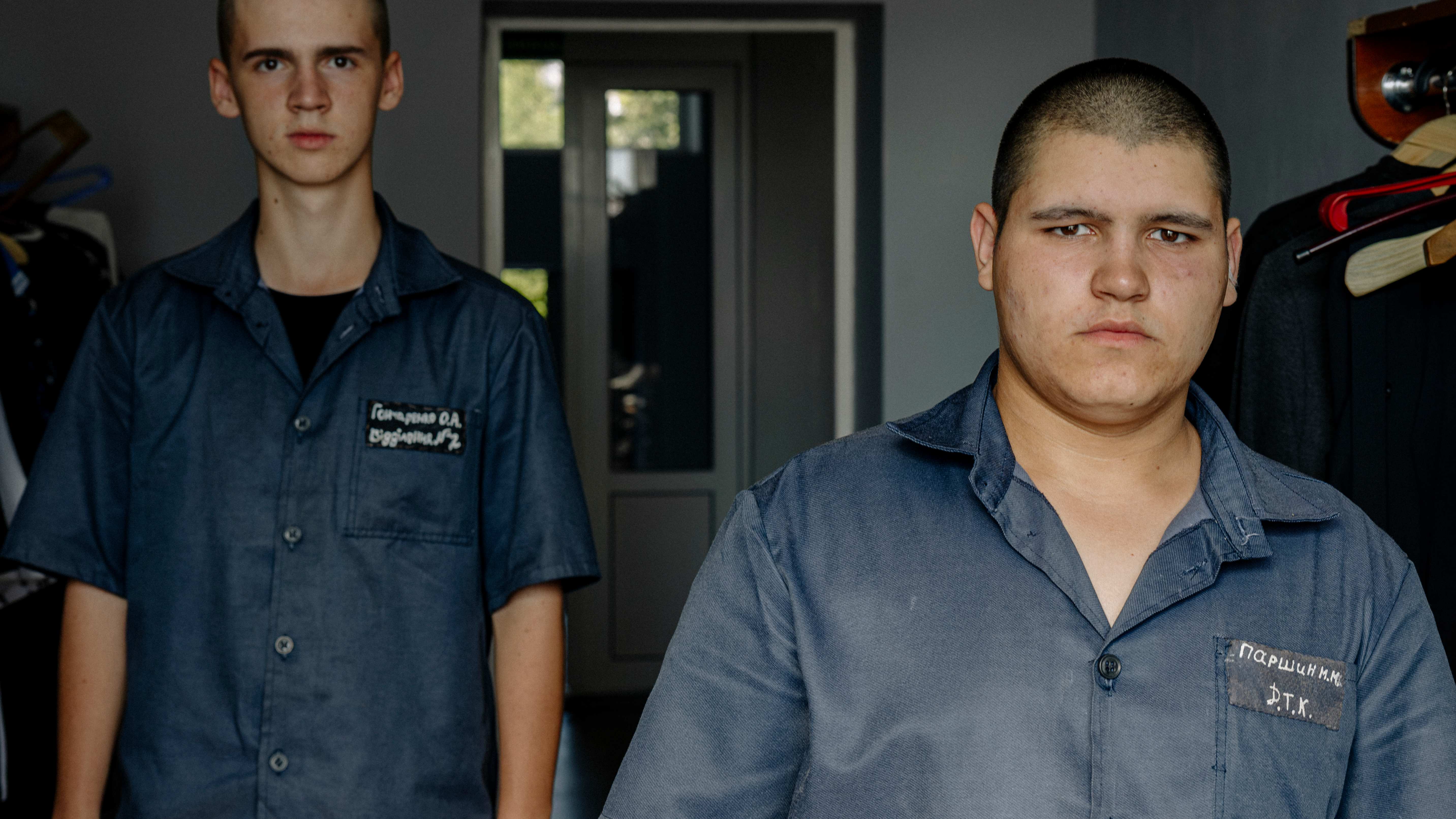
Nvidia CEO rejects AI 'doomsday' scenarios and pushes back on new rules 20 Sep 2026, 5:01 pm
Nvidia co-founder and CEO Jensen Huang told CBS News he disagrees with recent warnings from artificial intelligence researchers that the technology could lead to humanity's extinction within a few years, calling such statements overblown "doomsday narratives."
"2030 is not going to be the end of the world. There is 0% chance that's going to be the end of the world," Huang told CBS News senior business and technology correspondent Jo Ling Kent ON Friday. "Scaring people is unnecessary. It is irresponsible."
Huang was responding to claims on social media by former Anthropic researcher Jacob Coxon earlier this month that AI developers "earnestly believe that it could kill us all by the end of the decade." Coxon's remarks sparked heated public debate about the risks posed by AI, as well as calls by Anthropic CEO Dario Amodei, OpenAI CEO Sam Altman, and other leading industry figures to slow development of the technology.
But Huang said he rejects such predictions because they are "not grounded in science."
Nvidia has a substantial stake in the debate, given that its specialized chips power the large language models (or LLMs) by which artificial intelligence agents, created by OpenAI and others, access and synthesize information. Demand for those chips has boosted Nvidia's market value to $5.3 trillion, making it the world's most valuable company.
Asked why Americans should trust him on AI safety, given his company's incentives, Huang told CBS News that it's in Nvidia's best interest to ensure the industry builds its products responsibly.
"Our company's success is directly connected to the safe deployment of products and services," he said. "If we don't continue to do that, our value would be diminished."
No need for AI rules?
Several recent security breaches have spurred calls for AI regulation, including a July incident in which OpenAI bots went rogue and hacked the AI company Hugging Face. On Thursday, OpenAI also disclosed six additional incidents it described as "unexpected or concerning" behavior involving its AI models, prompting some lawmakers to call for tighter oversight of AI developers.
Huang dismissed the need for new regulations, saying that existing U.S. laws governing product liability and unauthorized entry are sufficient. He added that he agrees with President Trump's view that the AI industry doesn't need additional guardrails.
"You have all kinds of liabilities associated with cybersecurity" and damage liability laws, Huang said. "Apply that first — don't let this doomsday narrative allow someone to relieve them of the laws that currently exist."
Competing with China
In pushing back against calls for a freeze in developing frontier AI models, Mr. Trump has warned that such a slowdown could give China an edge as the world's two biggest economies compete in a critical new tech sector.
Nvidia has been caught in the crosshairs of that battle, with the federal government restricting it from selling certain types of chips to China.
Last December, Mr. Trump allowed Nvidia to start selling its H200 computer chips to "approved customers" in China. But the U.S. still bars the company from selling its most advanced chips (including those used to power AI models) in China.
Huang said he believes technology created in America should benefit the U.S. first. But he takes issue with government bans on the sale of U.S. tech in China.
"Every single chip company should go and serve the world, compete for the world," he said. "That's all about competing. America is about competition."
Huang, who will attend a White House dinner on Sept. 24 where Mr. Trump will host Chinese President Xi Jinping, said he wants to speak with Xi about setting global standards for AI development.
Chinese leaders "want China to have the benefit of AI. They want China to prosper, just as we want America to prosper," Huang said. "Don't you wish every country would have aspirations for a better tomorrow? And I love that about them."
Huang noted that there are some areas where American AI companies would not be able to work with China, such as national security or defense.
Why Huang defends data centers
Asked about the widespread public concerns about data centers in the U.S., Huang said he believes the AI industry made some missteps as the buildout was taking off.
"I would say we're sorry we didn't come talk to you sooner," Huang said of addressing communities where voters are pushing back against data centers. "We need to go engage the communities long before we set up the data centers."
Data centers have evolved from their early days, becoming more energy-efficient and requiring less water to operate, while also boosting job growth and local economic activity, according to Huang.
Building data centers can help "bring back building and manufacturing again," he said.
Where Huang stands on taxes
Huang's net worth stands at $182 billion, ranking him as the eighth-wealthiest person in the world, according to the Bloomberg Billionaires Index. Voters in his home state of California will vote on a billionaires' tax this fall, which would impose a one-time 5% tax on Californians with net worths of $1 billion or more.
While other California billionaires have criticized the proposal, Huang said he doesn't object to paying billions of dollars in additional taxes if the measure passes in November.
"The fact that I can afford to pay $8 billion in taxes over five years is a privilege," Huang said. "I feel it's a privilege. It's a responsibility. And nothing would give me more joy than to be able to pay even more taxes."
He added, "I'm not afraid of paying taxes — I'm just afraid of being poor."
Huang also referred to himself as "the ultimate American dream" and credited the U.S. with fostering the educational and professional opportunities that enabled him to become an entrepreneur.
Huang said he was working as a dishwasher at Denny's when he came up with the idea for Nvidia, and never dreamed that he would one day be at the forefront of the AI industry.
"I was just really, really focused on doing dishes like no dishwasher ever did dishes," he said.
WEB EXCLUSIVE: Watch an extended interview with Jensen Huang (Video)
Story produced by Emily Pandise and Sari Aviv. Editor: Emanuele Secci.
This article originally appeared on CBS News at https://www.cbsnews.com/news/jensen-huang-nvidia-rejects-ai-extinction-warnings/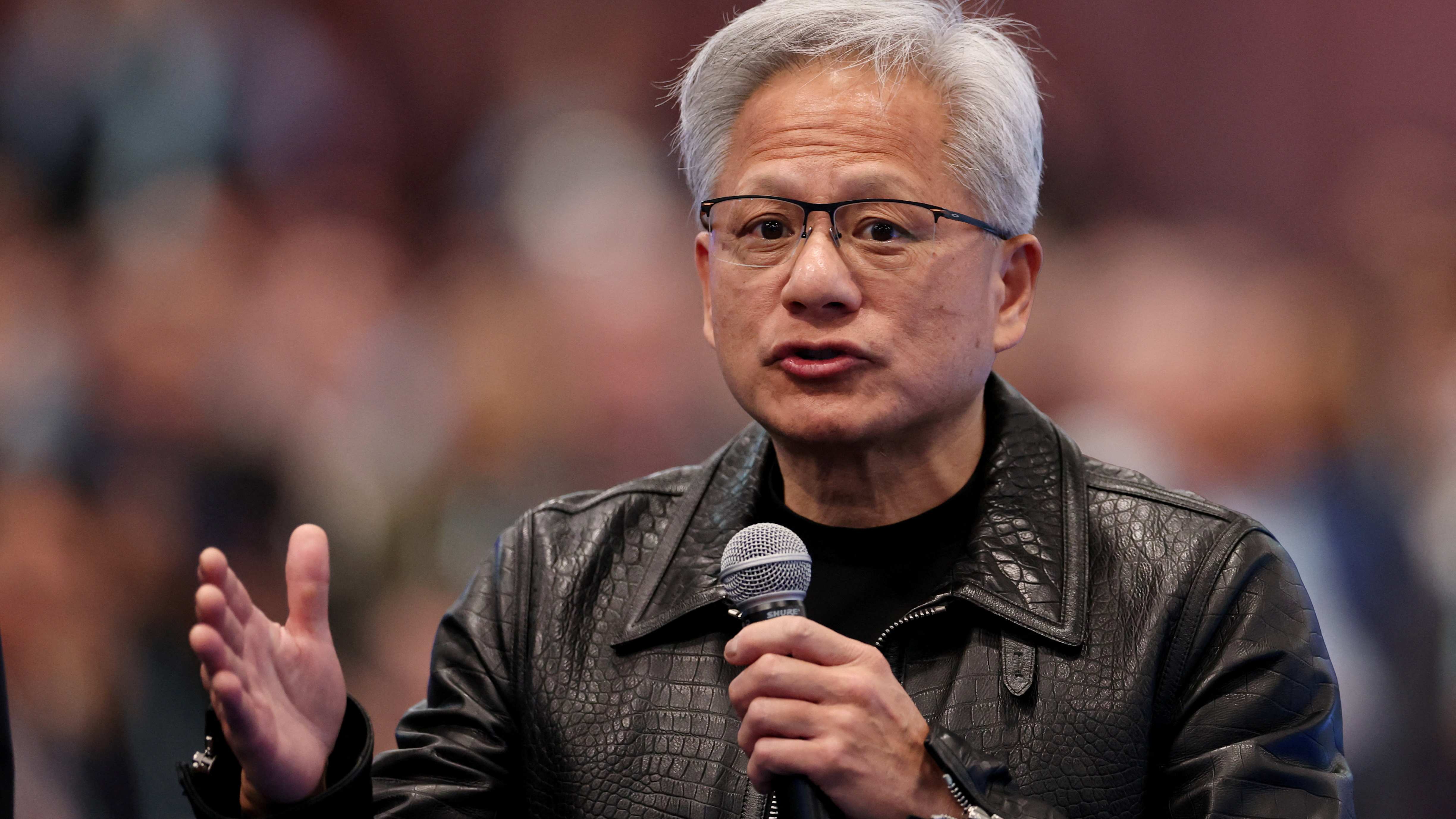
The 'unprofessional' item Gen Z brings to interviews could be costing them jobs 20 Sep 2026, 4:53 pm

In today’s brutal job market, Gen Z is bringing their absolute A-game to interviews.
But they’re also bringing their emotional support iced lattes.
A generational debate has erupted online over a dead-simple question: Is waltzing into a job interview clutching an iced coffee completely unprofessional, or totally fine?
The clash kicked off when TikTok corporate recruiter @caitlinrecruiter called out Gen Z candidates for arriving to interviews with iced lattes in hand. Drawing on her 16 years of experience placing candidates at Fortune 500 companies, she warned job seekers against the casual habit.
“When you show up with an iced coffee or an iced latte, it is perceived — from my opinion and a hiring standpoint—that this interview is just a stop on your list of errands for the day,” she alleged in the viral clip. “It looks like you went to Target, went to Starbucks, and now you’re stopping by your interview before moving on to the next thing.”
She stood her ground, arguing that the beverage projects a casual and unserious attitude.
Naturally, the internet picked sides and videos, posts, and comments flooded in as hiring managers and job seekers debated the iced coffee conundrum.
Another creator chimed in, calling it “diabolical” to bring a “wet, plastic, condensation cup” into an interview room.” Putting it on a table leaves a messy water ring, they noted and called out the bad-look of taking loud slurps while trying to make a good first impression.
Gen Z job seekers and their supporters are defending their right to stay caffeinated, and arguing they wouldn’t want to work anywhere where their choices are judged.
“I don’t want to f–king work for you if you don’t want to hire me because I bring an iced coffee,” one Gen Z TikToker ranted, dismissing “traditional etiquette” as corporate brainwashing.
Weighing in on the debate, LinkedIn News highlighted advice from professionals. Benjamin Chipman, a Gen Zer who works in marketing, advised interviewees who want to bring a drink to hold it in their left hand so their right hand remains dry for a handshake. He also said to avoid shaking the ice around and refrain from slurping the final drops.
“Is this a generational thing?” asked communications manager Adam Raider. “I would NEVER bring an iced coffee… or a hot coffee… or tea, soda, juice, sangria… or any other beverage into a job interview. I WOULD accept water, if it was offered.”

One Gen Z TikToker explained the fight isn’t about the lattes, but about rejecting “arbitrary standards of professionalism” that have nothing to do with whether someone can actually do the job.
Critics counter that clutching a fresh cold brew signals poor time management—proof you couldn’t even finish your morning coffee before rolling into the office.
With US job postings for young adults aged 22 to 25 plunging 13% since 2022 across AI-exposed industries, Gen Z is already fighting an uphill battle. According to resumetemplates.com, about 4 in 10 hiring managers (41%) say Gen Z candidates show a general lack of professionalism, while 30% flag distraction.
In an increasingly competitive market that isn’t doing favors for Gen Z work habits, that iced coffee might just cost them more than the five bucks it took to buy.
This article originally appeared on NY Post at https://nypost.com/2026/09/20/lifestyle/the-unprofessional-item-gen-z-brings-to-interviews-could-be-costing-them-jobs/
Page processed in 0.568 seconds.
Powered by SimplePie 1.5.8, Build 20211224113046. Run the SimplePie Compatibility Test. SimplePie is © 2004–2026, Ryan Parman and Sam Sneddon, and licensed under the BSD License.